Call Me Eutychus
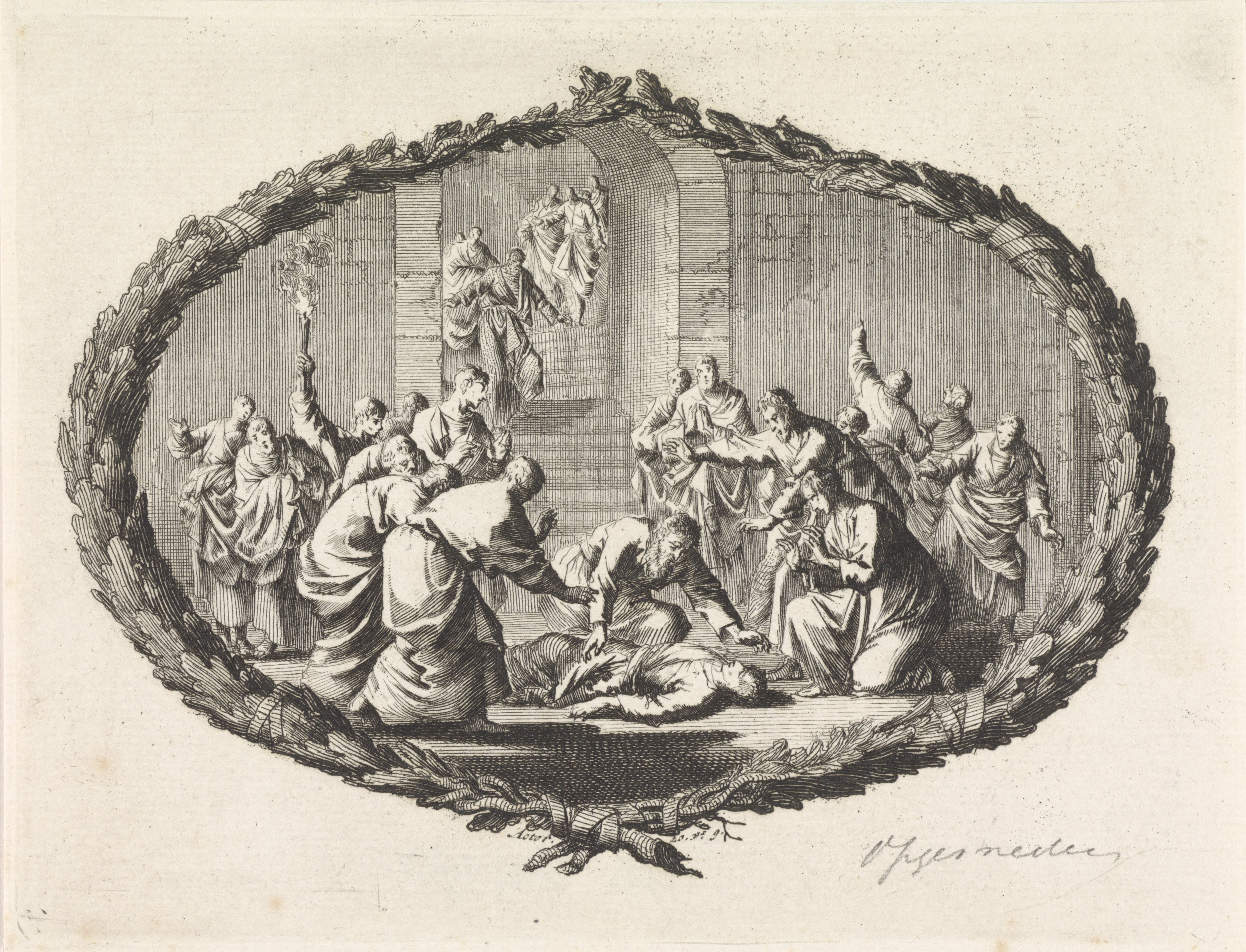
Almost two thousand years ago, a young man sat in a window, listening to the great teachings of St Paul. As the great teacher would be leaving the next day, he taught late into the night, well past midnight. The young man fell asleep, falling three stories down to his death. St Paul, being the responsible teacher that he was, brought him back from the dead through the power of the Holy Spirit.
Afterward, they had some food, talked until dawn (probably having some laughs at St Paul's expense – I mean, how dull were those teachings??), St Paul left, and everyone went home. It is written in Acts 20 that the people were greatly comforted that the young man was brought back to life, as nothing kills the mood of a Bible study like death.
That young man's name was Eutychus. The name Eutychus means “lucky”.
I have to imagine that the second conversation had a somewhat different tone than the first. St Paul had seen and experienced many extraordinary things, and he would have been an amazing teacher, but still… when you have a student falling asleep in class, well, it just stands to reason that there’s room for improvement. Regardless, once someone in a group of people that you know personally has just died and come back to life, right in front of you, that’s certainly going to capture your attention!
Not only that – but it also provided added evidence that St Paul’s words were Truth. Lots of people can claim to talk about God, and the right path to Him, and His Divine Will. But when that same person performs a miraculous healing in front of you, it lends an air of credibility to your words that teaching alone doesn’t possess. I’m not saying we should blindly follow after any miracle worker who comes our way (in fact, Scripture specifically tells us not to do that!), but the miracle was one sign that St Paul’s words were from God. St Paul’s teachings were also consistent with Scripture, which is another essential sign that his words were from God. The healing provided additional support and proof that St Paul was teaching in a way that would open up the Word of God to the listeners, and not mislead them.
We live in misleading times. There are a lot of people with a lot of opinions, and a lot of them believe that those opinions are righteous. Many of those people even believe that those opinions are Godly – and I do not believe that they can all be right, because there is such a diversity of opinion that I find it difficult to believe that God would have all those differing viewpoints. I recognize that God is much greater than I will ever comprehend, but some of these viewpoints are so different that it may well be beyond the ability of the Divine Majesty to contain all of them.
Which puts me in the position of having to choose; to decide where do I make a stand when it comes to what I believe about God? I am Catholic, so if I choose to follow the rules of the Church (which I do), then a lot of the decisions have been made for me. I believe in God the Father, God the Son, and God the Holy Spirit. I believe in the Truth of the Sacred Scripture and Sacred Tradition, as codified in the Bible and the Catechism. I believe in the efficacy of prayer, so I request prayer from both some of the living (the people I trust) and some of the dead (the Saints). I believe a lot of things.
I have believed different things at different points in my life, and I have always tried to live true to the beliefs that I had, when I had them. When I found those beliefs to be contrary to God, I did my best to let go of them; but for the most part, I found that my beliefs didn’t get replaced as much as they grew and changed.
My theological issues were very helpful to me in the beginning of my journey, of course, as they are for many people. But after the first few years passed, I found that I needed something a little more practical, a little more substantive; so, here I am. I’m trying to get to a place where I can reconcile a gentle, loving, all-powerful God with a world full of Sin. I need some way to take what I understand from the Scriptures and apply them to my life.
And there have been a few times when I felt like I almost understood something – like I was close to some sort of truth – and it just slipped away, like the memory of a dream in the morning. So I thought that if I started writing things down, perhaps at some point I’d catch one of those truths. Or at least, I’ll be able to remember what I was thinking when I thought these things.
Catholicism addresses many older issues through writings, and more contemporary issues through leadership. I live in the country of America, in the state of Minnesota. One very contemporary issue for us here is illegal immigration; in my opinion, that is not because we are constantly being accosted by illegal immigrants, but because we are constantly being told that illegal immigrants are such a problem for our society. A few months ago, the US Conference of Catholic Bishops came out with a statement expressing concern over the treatment of illegal immigrants in our country. Pope Leo XIV (the head of the Roman Catholic Church) supported it.
As I’m writing this, there are approximately 2000 ICE and Homeland Security agents being deployed to Minneapolis (where I live), ostensibly to rid the state of illegal Somali immigrants. As far as I know, that would make this the largest effort by far of the current administration’s crackdown on a metropolitan area to deport illegal immigrants. Interestingly, they came out with a study four days ago (“Mass Deportations Are Improving Americans’ Quality of Life”) that doesn’t include Minneapolis (or anywhere in Minnesota) as one of the top 20 metro areas with the largest illegal migrant populations.
There was a large fraud case involving some Somali persons; as far as I know, they have all been identified and are going through our legal process. If our justice system is fair, they will all serve jail terms and pay restitution, as will the person who was the head of this fraud (who is not Somali). My understanding is that some of them are already in jail. Since we don’t have a large population, the deployment of agents must be due to the fraud case.
But the actions of some do not justify the persecution of all. I’m not nearly as concerned about the fraud case, or even the deportations, as I am with the conduct of the persons who are coming here, and they way they are treating other people – whether they are citizens or not, legal or illegal. Whatever a person’s status may be, whether they broke the law by coming into this country illegally, or by shoplifting, or by fraud, or by murder – they should be treated with respect and decency.
Our own President was previously convicted of 34 counts of fraud himself; I highly doubt that he would have wanted ICE agents and Homeland Security going after him and his friends over that. And the ICE agent who recently ended the life of a local citizen – I have to imagine that he would want to have a fair trial before his peers, at the very least; not to be thrown into a cage somewhere and forgotten.
But this isn’t the world I live in today. My world is split between people who seem to think that those whose sole crime is being here illegally should be treated with less respect than we give animals in shelters, and those who would like to go back to how we were handling illegal immigration prior to 2017. And my perspective is fairly simple – the Catholic Church teaches (Catechism paragraph 2241):
The more prosperous nations are obliged, to the extent they are able, to welcome the foreigner in search of the security and the means of livelihood which he cannot find in his country of origin. Public authorities should see to it that the natural right is respected that places a guest under the protection of those who receive him.
Political authorities, for the sake of the common good for which they are responsible, may make the exercise of the right to immigrate subject to various juridical conditions, especially with regard to the immigrants' duties toward their country of adoption. Immigrants are obliged to respect with gratitude the material and spiritual heritage of the country that receives them, to obey its laws and to assist in carrying civic burdens.
The first sentence reads, “ The more prosperous nations are obliged, to the extent they are able, to welcome the foreigner…”. We are able. We should, and we must, welcome. Now, I realize that our immigration system needs a lot of improvement. A lot. And there are people who will come to this country to do bad things, I’m sure. But there are also people who are already in this country who do bad things. We have a process to deal with those people; we send them to jail (unless they’re able to get out of the legal process, because some people are able to get around our legal system). And I’m certainly not saying that we never need to deport anyone, ever.
But there is a certain type of teaching that I have heard, and it drones on and on and on, and it tells me about how important it is that America be just for Americans, and how much more prosperous we’ll all be once all of the illegal immigrants will be kicked out. And it tells me that once all of the right people are using the correct restrooms, and once all of the pronouns are being used correctly, and once all of the correct surgeries have been legislated away, then society will be a better place to live………
It’s enough to put a person to sleep.
Here’s my problem. The argument has no LIFE in it. I’m not talking about falling-out-of-a-window-and-being-brought-back-to-life miraculous life. I mean the kind of life that came from Jesus walking the streets of Jerusalem LIFE. He was constantly arguing with Pharisees over the Law, remember? It wasn’t because they didn’t understand the Law – they certainly understood it.
It was because they chose to use the Law to restrict people to the extent that the people felt oppressed by God, rather than freed by God. The intent of the Law was to help us to understand that we are all creatures of sin and limitation, BUT CALLED TO A HIGHER PURPOSE. When we use the Scriptures to focus on our own limitations, and when we are humbling our hearts in front of God, then we are at the beginning of wisdom. When we use the Scriptures to focus on other people’s limitations, and when we are judging others using God’s righteousness, we are becoming Pharisees ourselves.
I don’t want to hate immigrants. I don’t want to hate the government. I don’t want to hate anyone. And I don’t want to make anyone’s life more difficult, though I know that there’s no way to avoid that. And I know that my opinion isn’t really worth anything except to me, God, and whomever might want to read about it. But I don’t believe that my battle should ever be against people – it should be against spiritual forces of wickedness. People themselves – all people – are sacred.
But there are many, many words being said and written. I have a few words that I would like to write, and so here I am, writing down those words. I have fallen asleep, more than a few times. In some ways, you might even say that I’ve died, and been brought back to life; maybe I’ll write about that some time, too. It will, without doubt, be far more interesting than what I have written here. Because really, the only teaching I’m interested in, is the kind that is going to bring life.
Call me Eutychus.