Sana Mashiro .03
This post is NSFW 19+ Adult content.
Viewer discretion is advised.

In Connection With This Post: Sana Mashiro .02
https://hustin.art/sana-mashiro-02
Since the 2010s, the infinite expansion of SNS platforms within the internet and mobile environments—notably through TikTok, Instagram Reels, and YouTube Shorts—has altered the expressive range of the female body down to an unprecedentedly microscopic level. Today, the choreographed poses of K-POP idols and influencers are consumed daily, as naturally as the air we breathe in digital spaces. While direct exposure of intimate areas is avoided, the codes embedded in their movements clearly imply sexual metaphors.
Jean Baudrillard defined contemporary culture as “Obscenity.” This is not merely an adjective meaning “erotic,” but a state where “everything is exhibited without filter, and secrets to be hidden have vanished.” As Baudrillard predicted, modern digital visual culture is a world where the dichotomy of exposure/concealment no longer creates a true difference in perception. The visual emphasis on outlines—the violent movement of bust and pelvic lines, the ‘nipple-poke’ through braless tops, and the ‘camel toe’ at mid-groin—already communicates the existence of the nipple and the vulva through highly codified signs. These simulacra produce a state of hyper-visibility that does not merely overwhelm the original “vulva,” but precedes it—rendering the Real itself redundant. As an everyday obscenity consumed instantly, they relatively diminish the obscenity of the actual genitalia. Now, the exposure of the physical vulva feels like a redundancy of already learned data, merely a conclusion that arrives too late—not as revelation, but as confirmation.
Around 2020, triggered by the global isolation of the COVID-19 pandemic, the rise of direct-to-consumer (D2C) adult platforms like Chaturbate, OnlyFans, and Likey led to the effective collapse of the boundaries of the special class known as “porn stars.” We have entered an era where any ordinary woman can become the subject of adult content at any time. Beyond simple genital exposure, images of sexual intercourse are circulated infinitely in daily life. In the public eye, metaphorical images from mainstream platforms and pornographic images from subscription platforms are now indiscriminately mixed. The public has repeatedly learned from tens of thousands of nude/non-nude images, resulting in the construction of a massive database of the sexualized anatomy within the brain. Even if a specific area is covered by clothing, the brain immediately contrasts the anatomical reality beyond that surface with past exposure data, rendering what lies beneath in real-time.
Furthermore, according to Walter Benjamin’s “Optical Unconscious,” when an image is infinitely reproduced by the same technology, it can no longer maintain its unique “Aura.” When repetition reaches a critical point, concealment loses its function. Under these conditions, clothes are still worn, but they are merely signs that have lost the mystery of hiding. At that moment, clothing is read not as a shield but as a “failure to hide,” and the aura of “non-exposure” no longer functions. The visual excess driven by digital network algorithms has moved beyond the stage of anesthesia—which numbs visual perception—and into the stage of “transparency.” Benjamin’s insight has evolved into the concept of a “Digital X-ray,” where the public eye has reached a state of “transparent gaze” that penetrates the opaque curtain of clothing.
Therefore, modern digital visual culture is a “state where boundaries have dissolved” between the seen/the unseen. It is akin to an overlap of visual layers that already exist in a penetrated state. The “costume” of a mainstream pop idol and the “no-costume” of AV seem to exist as separate layers, but in public perception, they are already integrated into a single “erotic transparency.” In this context, Sana Mashiro’s naked body takes on a subtle “simultaneous heterogeneity,” perceived as a state of “paradoxical superposition.”
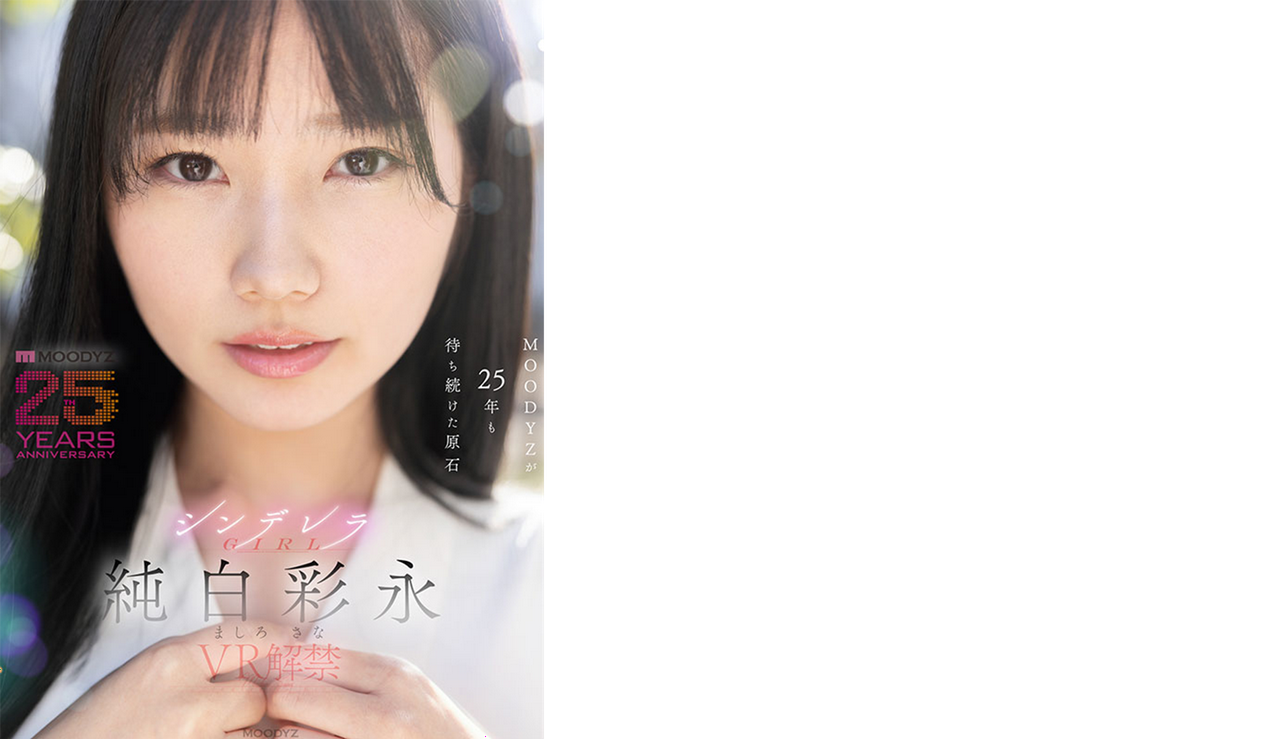 As delineated in Part 2, her bodily exposure generates a vivid and wondrous sense of transgression. It carries an unrealistic shock—as if saying “Finally, it is being seen”—while simultaneously appearing as a smooth cognitive flow, as if “what should naturally be seen is simply being seen.” Sexuality is accepted through Sana—a sexuality once strictly hidden and circulated only implicitly within mainstream idol content—as a natural extension, a conclusion that arrived too late. Her nips and pussy are fragmentary objects that stimulate intense fetishes, yet they are presented plainly as parts of an everyday body—“naturally visible because they are there.”
At this point, the fundamental meta-question is whether the dichotomy between the AV industry as subculture and the public entertainment industry as mainstream is still valid. Is a “seamless reconciliation” between the Mainstream-Light / Subculture-Shadow now possible? Is Sana Mashiro declaring that even the “pussy” covered in hair and the “mouth” gripping a penis now function merely as “elements of entertainment expression”? Is this an unofficial metaphorical proclamation by the AV industry that a “Porn Idol” can now be just another mainstream style? Or, moving further, has the zeitgeist entered an era that officially declares the “normalization of idol sex images”? Is this the first clear attempt to settle JAV into the same status as “mainstream pop culture”? Perhaps we have entered a time where we can publicly view, enjoy, and discuss even the sex of a “pure” idol. While this peculiar phenomenon has shown incremental signs across the broader JAV industry through various celebrity-level actors since the early 2020s, Sana Mashiro in 2025 is read as the first decisive signal of this blatant change.
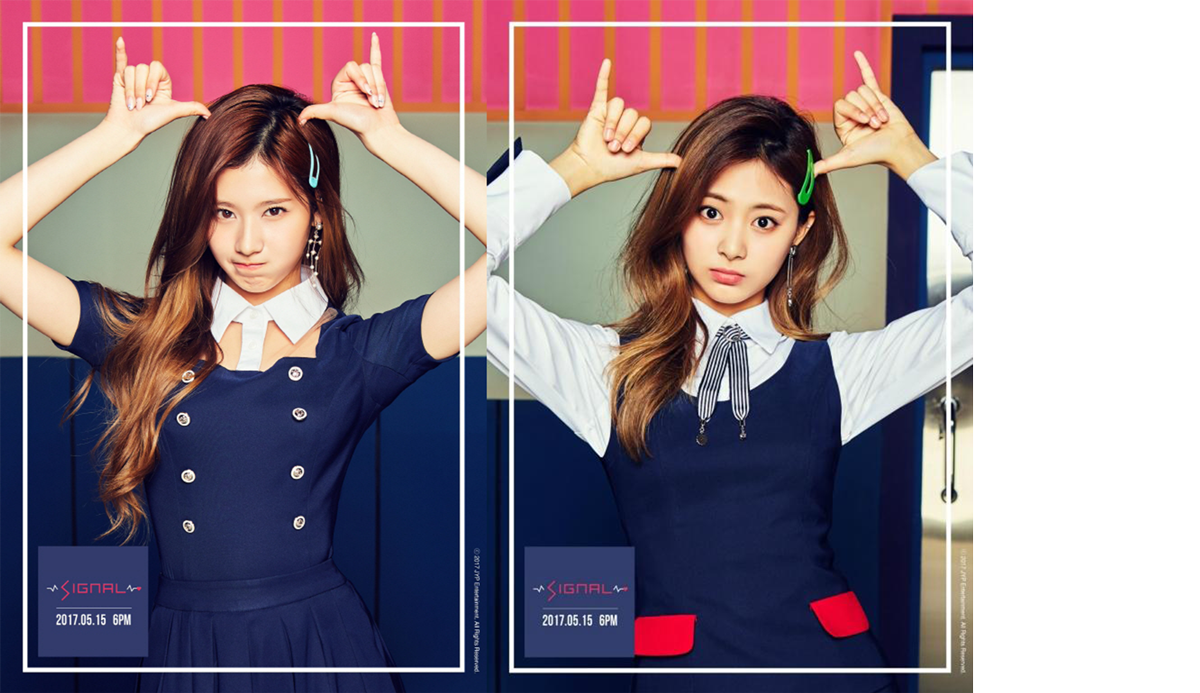 A noteworthy point in this regard is her stage name, ‘Sana (さな).’ The Japanese notation and pronunciation are perfectly identical to Sana, a member of the globally recognized K-POP group TWICE. The signifier ‘Sana’ invokes the mainstream idol cluster already engraved across Korea, Japan, Greater China, and Southeast Asia, immediately stimulating the image memory stored in the public’s unconscious. Moreover, her atmosphere and aura are more similar to Tzuyu, the Taiwanese member of the same group. It appears that the production company, Moodyz, has cleverly “hijacked” a K-POP star's Japanese identity and pan-Asian recognition through the device of “identical naming.” If so, this would be a highly strategic move to amplify the visual and psychological déjà vu of watching a mainstream idol’s YouTube vlog.

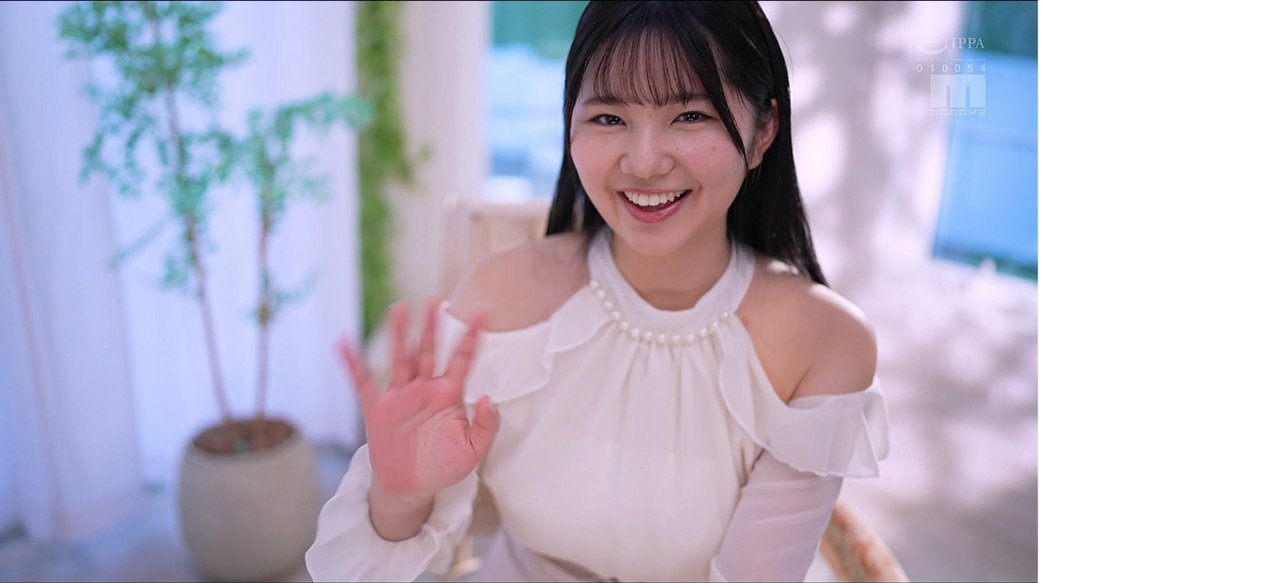
Another interesting point is her debut interview, where she mentions liking J-POP and K-POP idols and having been scouted several times, but giving up after seeing how hard it was for a friend in the idol industry. Bizarrely, she even demonstrates simple Korean pronunciation translations using a Korean-Japanese board, adding that she has studied the language. In the final epilogue, she says a clear “안녕! (Goodbye!)” to the Korean fans once more. Despite Japanese AV not being officially/legally distributed in Korea, what does this blatant and repeated “calling to Korea” signify? It recalls the cases of Sora Aoi and Yua Mikami, who failed to penetrate the Korean mainstream; in contrast, Yuna Ogura successfully bypassed these barriers through her personal YouTube channel launched in 2017, establishing herself as a comedic entertainer in the Korean market. Ultimately, the provocative pro-Korean gestures in her debut work may be a strategic foundation and a meticulously designed foreshadowing for the future Korean market.
Looking at all these signs, she appears to be an existence that has opened and touched the empty space of an undefined “Third Zone,” successfully overcoming the familiar “innocence/lewdness” narrative clichés of traditional JAV. Sana Mashiro possesses a strange, paradoxical dissonance where heterogeneous aesthetic statuses coexist: 1) the active sensuality of a mature glamorous body, 2) the vulnerable mental aura of dazed beauty, and 3) an extreme celebrity-idol-level face. This contradiction itself prevents her from being easily categorized. The mismatched combination (Gap Moe) of “Natural H-cup glamour” + “Innocent/dazed/Passive” + “Idol-level face” is not a simple character experiment, but a subtle rearrangement of the AV star-making formula that JAV has stably maintained. Looking at the copy on Sana’s debut promotional posters,
“いやいや25年に1人の逸材!”
“No, no, a talent that appears once in 25 years!”
“1000年に1人なんて待てないよ!”
“We can’t wait for someone who appears once in 1,000 years!”
...and so on are clearly stated. This suggests she is being strategically planned as a super-premium actor, transcending just being the mere Moodyz 25th-anniversary commemorative figure. She appears to be a new evolutionary paradigm appearing 23 years after Sora Aoi (2002) and 10 years after Yua Mikami (2015), testing the potential for a global status evolved even further than her predecessors. Is the “Sana Mashiro Event” the lewd and daring prelude—the first of its kind—announcing the global era of the “Post-AV Mainstream Pussy Idol”? (Screenshot: #1-#2 MIDA-210, Debut)
For Related Reference With This Post:
Jean Baudrillard: Simulacra and Simulation (The Body, In Theory: Histories Of Cultural Materialism) (1994)
https://a.co/d/3RxQdqT
Walter Benjamin: The Work of Art in the Age of Its Technological Reproducibility, and Other Writings on Media (2008) https://a.co/d/bVVpAVt
#JAV #PornAesthetics #SanaMashiro #debut2025