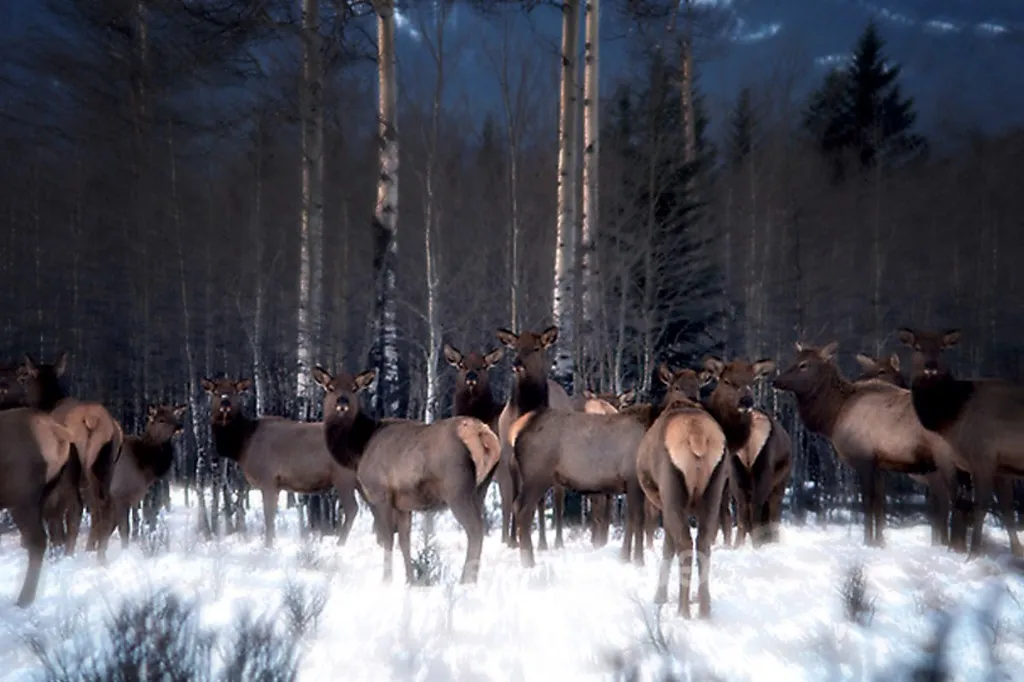
The winter herd in Hancock Gulch above Silverton Colorado
WOMAN AS ELK
(Note: This is a repost of a essay I wrote several years ago after a friend's death while I worked in the San Juan mountains of southwest Colorado)
Goethe once wrote, “A man’s search for meaning must be recognized.”
I’ve been thinking lately about my friend David, who ended his own life. Outwardly, he seemed to live a charmed existence — a devoted family, an unshakable faith, wealth, and a future that appeared secure. In our community, he was valued, a quiet benefactor who gave generously but never sought recognition. People saw him as a man blessed in every way, grounded and good. Yet, beneath the surface, an emptiness grew. No one suspected that he was contemplating suicide. His real thoughts were hidden, his pain immense.
In his book Man’s Search for Meaning, Viktor Frankl — a neurologist, psychiatrist, and survivor of the Holocaust — tells the story of an elderly doctor who came to him, unable to overcome the depression that had gripped him since the death of his beloved wife. Rather than attempt a clinical diagnosis, Frankl posed a single question: “What would have happened if you had died first?” The doctor, startled and pained, replied, “That would have been terrible for my poor wife. She would have suffered tremendously.” Frankl gently observed, “You see, doctor? You have spared her all that suffering — but the price you pay is to survive and mourn her.” In that moment, the man’s depression lifted; his grief was reframed as an act of love, and his life regained purpose.
I have friends who are therapists, and as best as I understand, their work centers on adjusting a person’s emotional state to make change possible. Yet I’ve noticed they rarely explain why this is the only approach — or consider what might be lost when it succeeds without addressing the deeper question of meaning.
If you read Adler, Freud, or Skinner, you’ll find a common thread: each believed that emotions powerfully shape human experience, and each sought ways to change them. Yet time in the wilderness can lead to a different conclusion. In a deep mountain forest you begin to wonder whether we might be better served by accepting our emotions and using them to deepen our awareness, rather than constantly trying to alter them. I’ve never been convinced that a lifetime spent studying mice in cages — an environment no wild mouse would ever choose — yields wisdom greater than what already exists in the rhythms of untamed animals and ecosystems. Medicine may prize the clarity of objective thought, but that does not make the unseen and subjective any less powerful.
Such truths resist reduction to phenomena observable under a microscope or MRI scan. Yes, neurons fire, synapses exchange signals, and chemicals shift. But guitar strings also vibrate when plucked, and that alone does not make someone a musician. Observing sound as data is one thing; experiencing the meaning and beauty of a song is something entirely different.
Psychologists often describe mammals — humans and elk alike — as possessing a form of consciousness shaped by sensation and experience. I think of it differently: what we are witnessing is an evolutionary orchestra of millions of musicians, each playing their part in a powerful, unbroken symphony. The mews, chirps, and haunting autumn bugles of elk echoing through valleys are not merely sounds; they are the resonance of twenty million years of accumulated knowledge, carried forward in living form. If the same holds true for humans, then what we pass to future generations may already be outdated before they have the chance to express it — echoes of wisdom shaped by the past, even as the world changes beneath us.
Emotions, like instincts, are shaped through experience and repetition — no different from the reaction of elk when a wolf or mountain lion stalks the herd. Our emotions may be more complex, but they are still forged by the repeated success of certain responses to our environment, not only in our own lifetimes but across countless generations. You could think of them as the notes in our “genetic song,” much like those of the elk.
The challenge in the modern age is that this song is harder to hear. Elk have lived for millions of years in the familiar rhythm of predator and prey, within the same mountains and forest edges that shaped their behavior. Humans, by contrast, face environments changing at a dizzying pace — especially in the last several thousand years, as we shifted from nomadic hunter-gatherers to dense urban dwellers. Our genetic song now plays off-key, disrupted by the instability of our surroundings. In this sense, elk are more “advanced” than we are, their behavior finely tuned to their habitat through the constancy of their world.
I agree with psychologists who say emotions exist to influence behavior in ways that serve an evolutionary purpose. But changing them assumes we understand that purpose. Even if we think we do, we risk interrupting a pattern of adaptation that could be vital to our survival in ways we cannot yet comprehend. Perhaps this — the deep trust in inherited patterns — is the hidden wisdom elk offer.
Many children grow up in emotionally disconnected homes, with no safe space to express themselves. Elk, by contrast, live in the constant safety of the herd. In my own family, my father ruled with an iron fist, daring anyone to challenge him, punishing tjose who did. My mother sought her own escape through teaching and by surrounding herself with dozens of dogs. I left home at the earliest opportunity, first for Colorado, then Canada. My father was a cruel man, and he believed his way was the only way, rejecting any opinion to the contrary. This created a stifling environment, where voices were muted and self-expression was crushed, trust non-existent.
Without the “wolf at the door” — and I would argue there is immeasurable value in that wolf — there were no immediate consequences for dysfunctional behavior, as there would be in the elk herd. Modern psychology often focuses on suppressing emotional responses, yet this can lead us to shape our lives around perceived logic while shutting down the emotional currents that keep us alive. We become reactive rather than responsive, ignoring dangers instead of addressing them.
Our culture labels emotional sensitivity as weakness. We learn to turn off our feelings, to prioritize acceptance over authenticity. In doing so, we slowly lose ourselves. Elk have no such luxury. Their feelings translate directly into action, shaped by the realities of survival. Their herds have complex social structures, and in my years as a mountain guide, I’ve observed the leaders are almost always older cows — wise matriarchs.
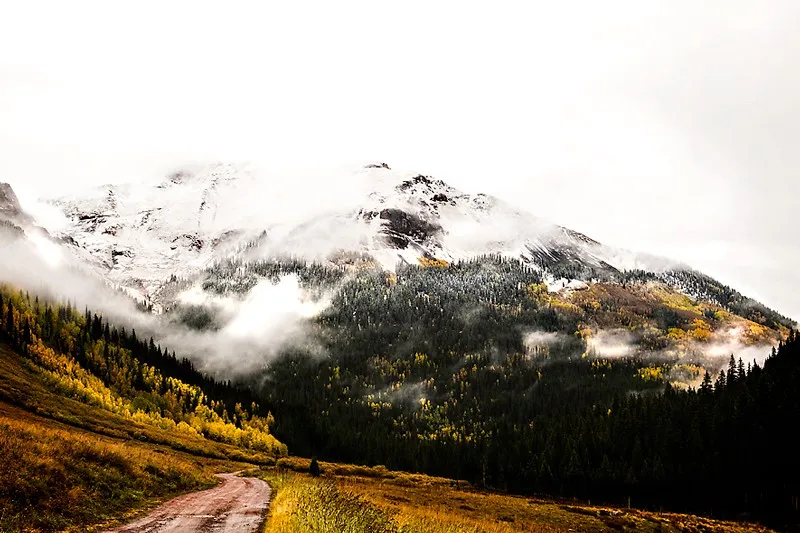
In Silverton, Colorado, high up in the San Juan Mountains at elevations between 9,000 ft (2700 m) and 13,000 feet (3,900m), most elk migrate down-valley toward Durango for winter. But a small herd remains, gathering each year on a sunlit slope just east of town. They are the same species as the migrating herds, yet their behavior is entirely different. My conclusion is the migration is a learned behavior — taught by elders and shaped by the history of winters past. One herd believes winter means scarcity and danger; the other thrives in place.
Watch closely, and you’ll see the matriarchs passing down this knowledge — guiding the young along ancient trails, showing them where to graze, where to bed down, and where to cross streams safely. In deep snow, they lead the herd to rocky outcrops of certain types of stone that radiate warmth at night. These lessons are subtle but vital: where to find food, where to find shelter, where to survive.
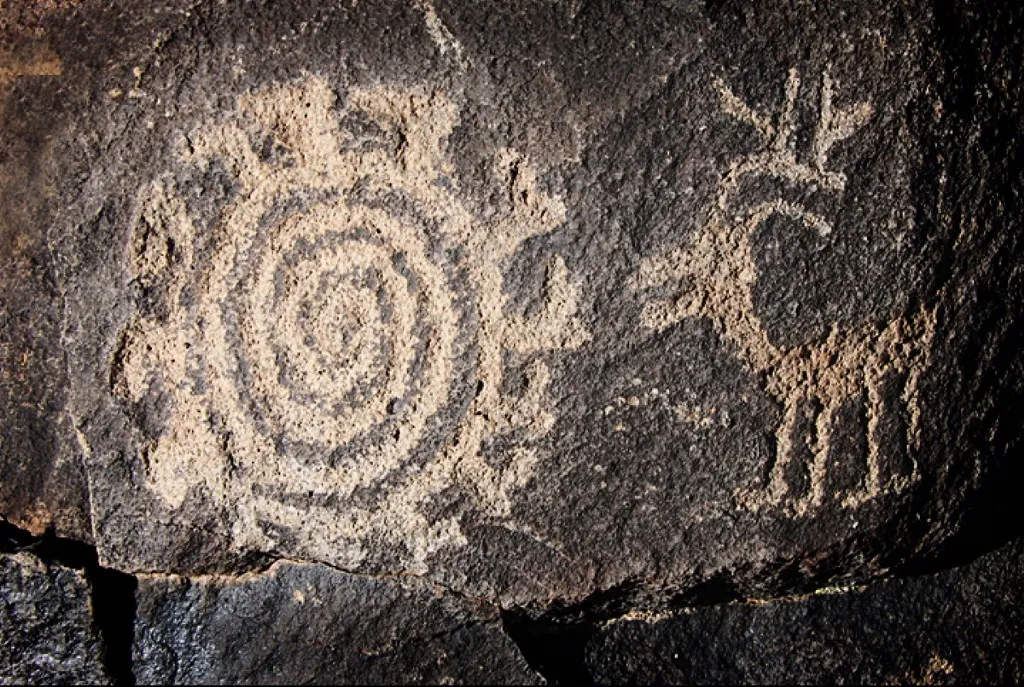
In the petroglyphs scattered across this region, elk appear again and again, sometimes carved alongside spirals that Carl Jung interpreted as symbols of a cosmic life force. The Ute people teach that there is no difference between two-legged and four-legged beings, that all are equal in the eyes of the Creator. I wonder what knowledge the elk might share if we could speak across species — and what connection they hold to the divine life force the Utes believe was set in motion by Senawahv, creator of the world and all living beings.
I’ve probably obsessed enough about elk — but what if we are more like them than we care to admit? Imagine the chaos if an elk therapist showed up in Silverton to counsel a herd on their fear of predators or winter. Elk accept their emotions instead of trying to control them. They trust instincts honed over millennia. What if we lived that way — respecting our emotions as a kind of intelligence? Suppressing emotions, as my friend David did, can sever us from our inner compass, sometimes with tragic end results.
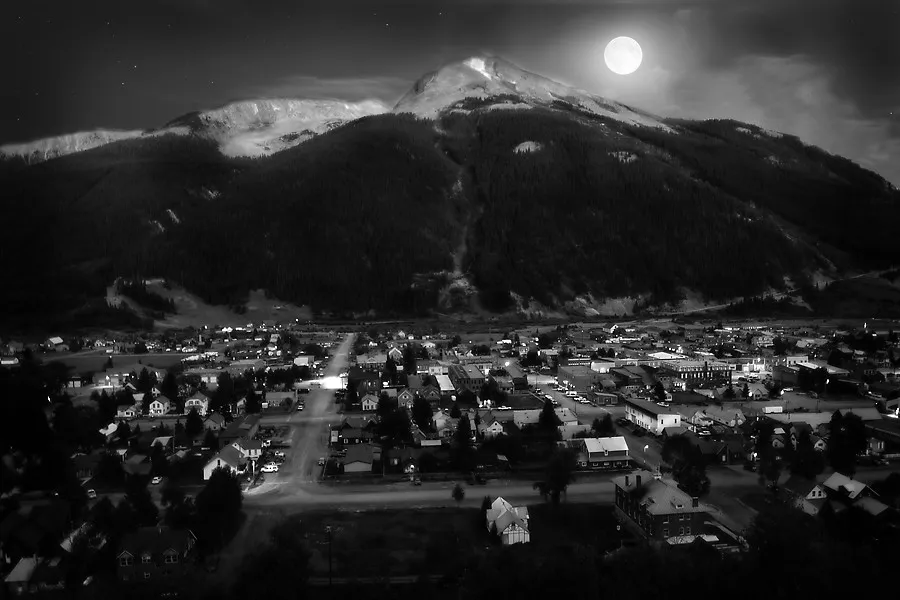
Silverton Colorado
Our brains may be larger than those of elk, but that doesn’t mean we manage our environment more wisely. When I watch elk, I see them learning and adapting every day, forming new emotional patterns at both the individual and herd level. I’ve tried to bring this “elk wisdom” into my own life. My partner may not resemble an elk — though she can be just as formidable — but watching them has taught me how to honor her emotions rather than override them.
For example, she has learned to believe that if a man sacrifices to give her what she wants — or refrains from doing something because she protests — it will eventually breed resentment. This fear, justified or not, plants the seed of emotional abandonment. Over time, the anxiety it creates can erode a relationship. In an elk herd, such a pattern would be unthinkable. Through experience and repetition, elk accept the emotions that serve them, trusting they have a purpose even if it isn’t obvious.
When I see my partner through that lens, I recognize that her emotions — even the difficult ones — may carry a deeper, evolutionary function. Honoring her feelings rather than trying to change them helps me understand her. I watch for subtle signs — the shift in her tone, the set of her shoulders, the figurative elk “ears” that signal distress. Her anger, fear, and joy are shaped not only by her own life but by generations before her. Instead of suppressing them, I choose to listen, because in them I hear the story of her herd.
Perhaps she is part elk — in disguise, of course — alerting me to the dangers in our world so that we can face them together. But to understand those dangers, I must first listen, and then ask why they are there.
Goethe’s words remind me that the search for meaning is not an abstract exercise — it is as essential to survival as food or shelter. David’s tragedy, Frankl’s wisdom, and the quiet lessons of the elk all point to the same truth: when we disconnect from the purpose embedded in our emotions, we lose a part of ourselves that evolution spent millions of years shaping. Meaning is not found by silencing our instincts but by listening to them — in ourselves, in one another, and even in the wild herds of elk that roam the San Juan mountains. If we can honor that inner song, slightly off-key though it may sometimes be, we may find that our search for meaning has been answered in the very voice we have been trying so hard to quiet.
Notes
1 Frankl, Viktor E. 2020. Man’s Search for Meaning. London, Rider Books.
2 Jaynes, Julian. 2003. The Origin of Consciousness in the Breakdown of the Bicameral Mind. Boston, Houghton Mifflin.
3 Southern Ute Indian Tribe. (2015). Ute Indians: History: Chronology. Retrieved from The Southern Ute Indian Tribe: ~https://www.southernute-nsn.gov/history/chronology/~
4 Carl Gustav Jung, Herbert Read, and R F C Hull. 2010. Psychology and Alchemy. London, Routledge.
5 McNeil, L. D. 2012. Ute Indian Bear Dance: Related myths and bear glyphs. Boulder, University of Colorado.
POSTED BY JON B CARROLL