The Comedy
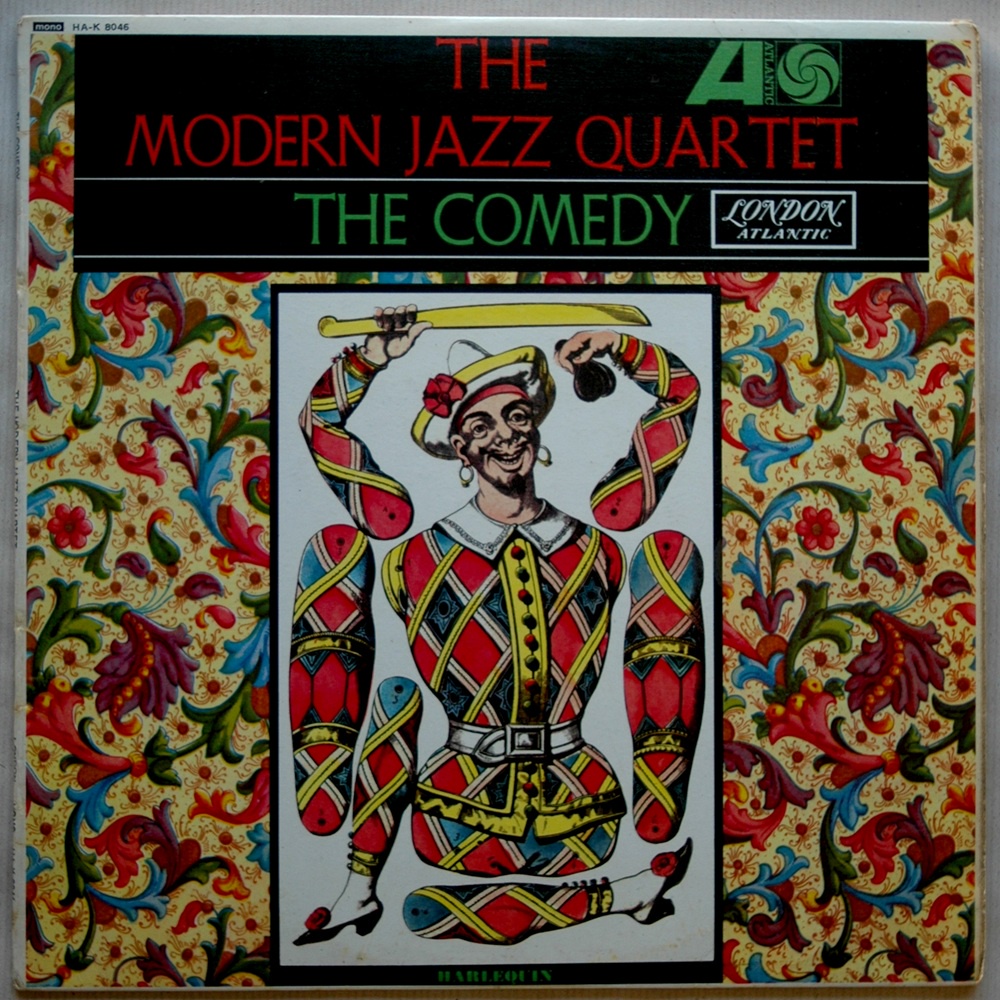
On Saturday I picked up a few LPs at the most reliable of my record-buying haunts. The best of them was The Comedy (1962) by The Modern Jazz Quartet, a colourful suite of tunes inspired by the Italian commedia dell'arte. It's a record (Fig. 4) that showcases the quartet's European influences. While enjoyable, it's a little light on the soulfulness that underpins their best work. It's interesting to contrast this record with its moodier follow-up, Lonely Woman, issued later the same year.
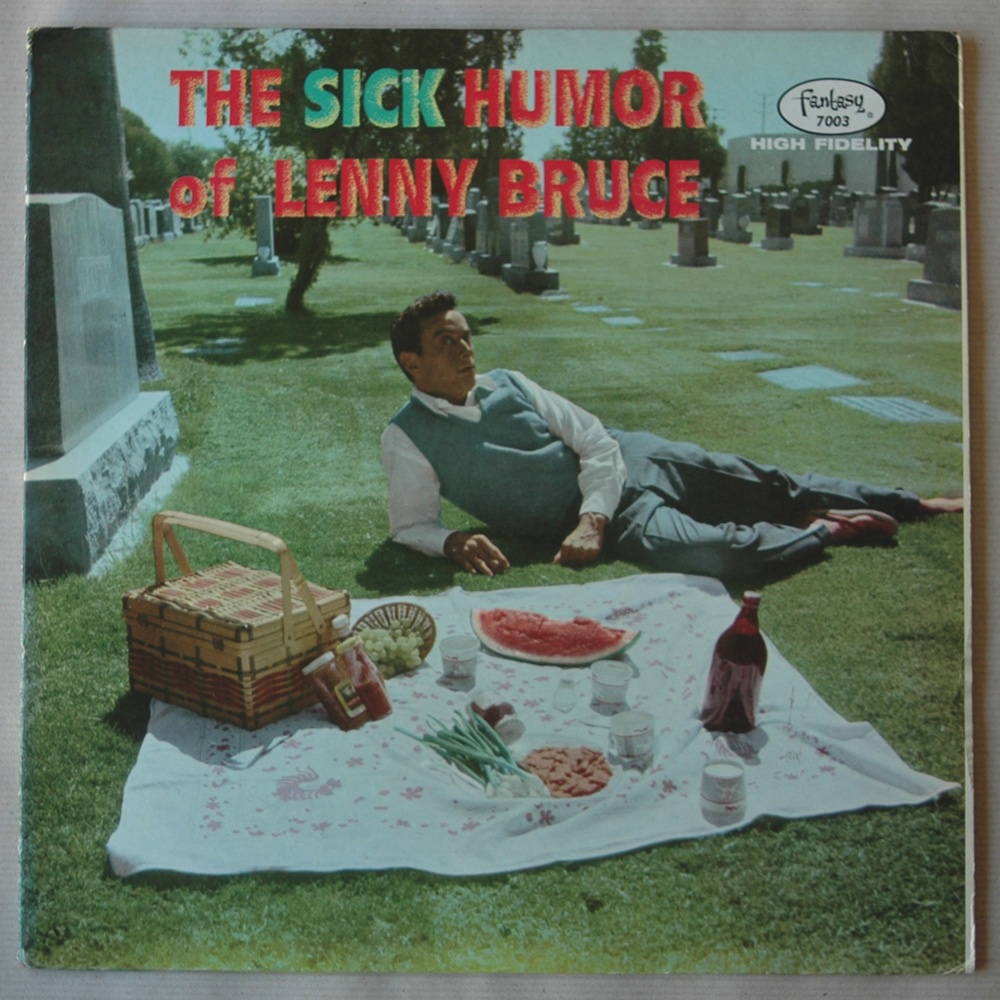
Acquired alongside it was a record exemplifying a very different aspect of comedy: The Sick Humor of Lenny Bruce. Originally released in 1959, my copy (Fig. 5) is from a 1987 re-issue (the same year Bruce's name came up in the lyrics of a certain song I then loved). I've read a fair amount about him over the years, but had never heard any of Bruce's comedy until now. I can't say it made me laugh, but it probably would have done had I been a young man in '59: I could see the appeal of it, at least. My sense of humour, I fear, has been eroded over time. I'm less often amused than I once was.
1987 was also the year The Green Flame was published. This is a dual-language anthology of Italian poetry (originals on the left, English translations facing them) that I finished reading on Friday. It was edited and presumably translated by Alessandro Gentili and Catherine O'Brien. Even though the word 'contemporary' appears in its subtitle, most of the poems in it are from the early-to-mid-20th Century. It includes authors I was already somewhat familiar with (such as Montale, Pavese, Ungaretti, Pasolini & Spaziani) along with others I knew only by name (Marinetti, Quasimodo, Sereni, Zanzotto) and still more I didn't know at all (notably Saba & Luzi).
My copy had been freely annotated in pencil by a previous owner. This was evidently someone fluent in Italian who was well able to take a critical view of the translators' work. Several translated words or phrases are glossed with clarifications or even crossed out and 'corrected'. As a monoglot I'm obliged to take the work of translators on trust, so it was interesting here for me to see a more knowledgeable reader's engagement with their renderings. There were some instances where the pencilled-in alternatives struck me as clearly preferable to the printed text, whereas most of the time I was unable to judge whether the 'edited' wording was any better than the original. In any event, it's a good anthology that has filled a gap on my poetry shelves.
When I'm working I like to have a large, thick, ruled notebook to scribble in. If I can’t make notes I struggle to think straight. With my employers being much too cheap to supply decent stationery, I buy my own. My choice for the past decade has been the Collins Ideal 6448, a casebound A4 book with 384 ruled pages. When I went to order a new one recently I was disconcerted to find them out of stock – which I hope is only a temporary state of affairs. As an alternative I bought myself the next best thing I could find: a Ryman A4 'Bumper' notebook. This has fewer pages (352) and thinner paper (70gsm rather than 80) than the 'Ideal', but it does have the advantage of being about half the price. I started writing in my new Ryman book on Monday, and think it will do the job well enough.