Review: Palaces
Simon Jacobs
223 pages
Two Dollar Radio (2018)
Read this if you like: “Sorrow” by Catherine Gammon, “The Road” by Cormac McCarthy, Bret Easton Ellis
tl;dr summary: Punk kids with a past navigate a world where people have vanished.
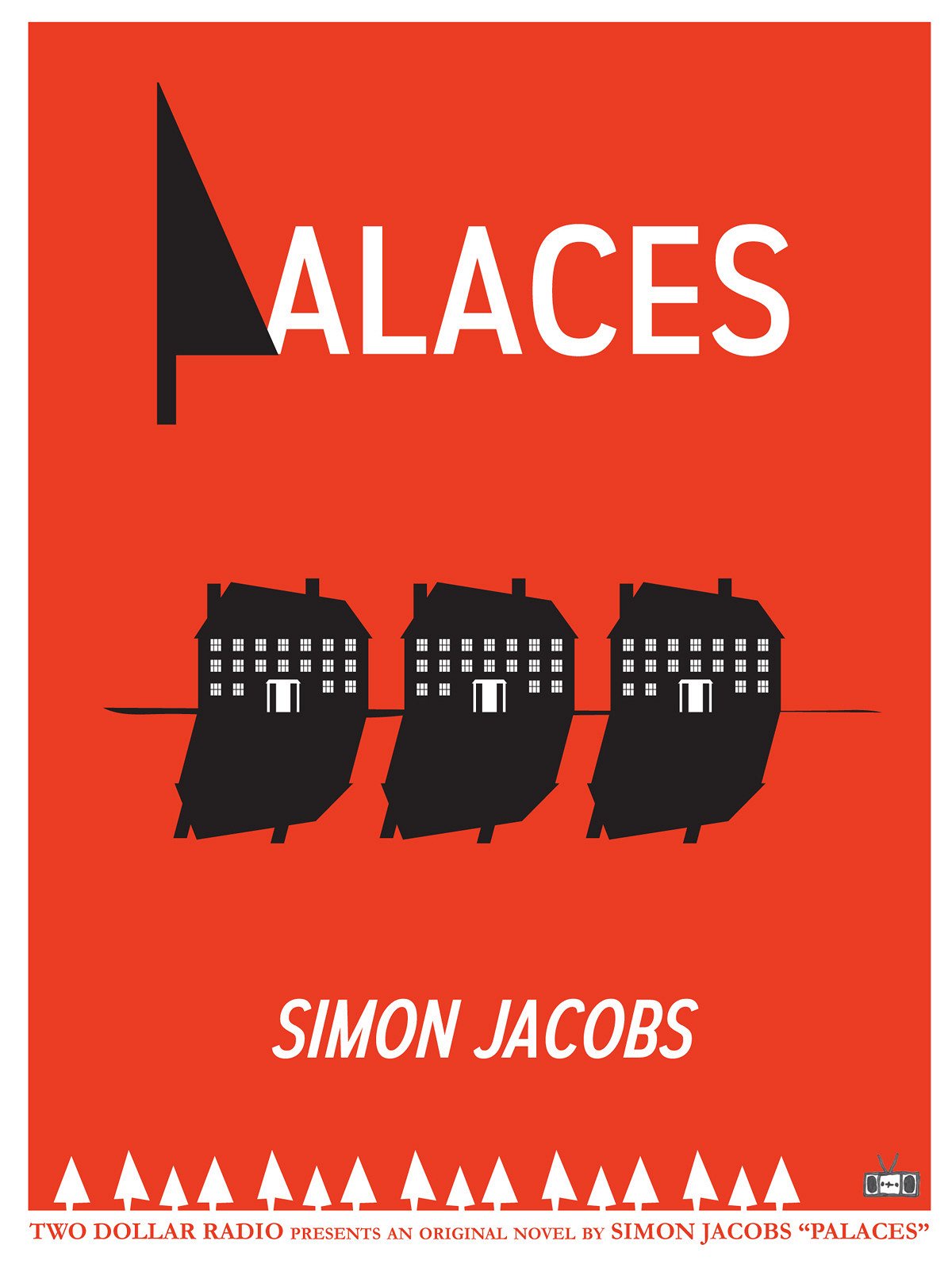
Lately, I've been picking up a lot of books that float around the edges of realism, not quite pushing into full fantasy territory but take little forays outside of consensus reality. Palaces is definitely in-line with this trend. It has a similar floaty, deeply interior feel to Catherine Gammon's Sorrow, and the voice beautifully matches the story and helps to build the tension and pull the reader through.
One of the most useful things about this kind of super-close, near stream-of-consciousness POV is that it leaves a lot of room for the reader to speculate about exactly what's going on and how much is happening inside the narrator's head versus what is actually some kind of supernatural force at play. Do weapons really just randomly appear in various places throughout the story, or is the narrator actually just a psychopath, or someone with multiple personalities? Whichever of these options you center as your truth alters how you see the other facts that are presented. If you believe the narrator about the gun just appearing, then things randomly appearing and disappearing in the mansions seems to reinforce this reality; if you don't believe him, his experience in the mansions just reinforces that he's probably crazy.
I think this is a completely intentional interplay set up by the author, and the lack of worldbuilding details is another piece in the puzzle, I think. No attempt is made to explain why everyone disappeared. It simply is, like the randomly appearing knife, and that leaves a lot of space for the reader to interpret things their own way.
It was a smart move to use John and Joey as the reader’s anchors. Since they live on the fringes of society, it's more difficult to get a sense for whether society itself has broken down or if they just exist in a part of it where normal rules don't apply. Even the scenes in the city at the beginning have a surreal, fairy tale kind of feel. The only scenes that feel like they take place in consensus reality are the ones before they leave Richmond that are shown in flashbacks. I actually found these intrusions of relative normalcy refreshing, a kind of palate cleanser from the weird.
From a craft standpoint, one detail that's done beautifully in Palaces is the weaving together of the past with the present. The control and slow release of information is very effective, and the past plotline helps to give the story a bit more narrative structure. The main plot thread is wandery and unfocused by design, so having the more straightforward past plot is helpful for grounding and balance. It also adds another source of narrative energy. The reader is as invested in learning about John and Joey's relationship as they are in the events in the story's present.
You would think, in a book about a world where people suddenly disappear, that absence of people would be the main source of anxiety. One of the things I found interesting about Palaces, though, is that the opposite is true. Whenever it's just John and Joey, things are calm. It's when other people show up that things start to get weird and/or dangerous. That happens even before they take the mysterious empty commuter train to the abandoned mansions. The only interactions with individuals shown on-page are potential sources of violence: the punk he screams at during the show, the men in their squat, the man on fire fleeing the riots. For the most part, this holds true throughout their time out in the mansions, too.
The potential exception is the character of Vivian, a child they discover hiding in a closet during their exploration of one abandoned home. The intriguing thing about Vivian, for me, is John's reaction to her. He comes to see her as a potential threat more than as someone who needs to be protected. His paranoia about her motives is mirrored by another weapon appearance, and was one of the main places I leaned toward reading John as someone with schizophrenia or a similar mental illness. Here again, though, like elsewhere in the story, it’s left open to the reader’s interpretation. Usually I’m the kind of reader who likes more grounding and clarity in my settings, but in this case I appreciated how the inherent ambiguity and lack of tangible details actually added to the story’s energy and gave it forward momentum instead of bogging it down, like that kind of confusion often does.
Palaces is one of those books where I definitely felt like it was smarter than me while I was reading it, which always makes me feel a little self-conscious about reviewing it. I think a lot of things would become much clearer after a second read and sitting with the story for a minute. The only place I felt actually confused on the first read was the ending. I don't want to give too many details for the risk of spoilers, but it takes a very sudden shift that I couldn't completely make sense of. Despite this, I enjoyed the journey through Palaces, and the fact that it didn't try to over-explain things, even if that did leave me with some lingering questions.
See similar posts: