Nitrogen Deficiency in Cannabis: A Visual Guide
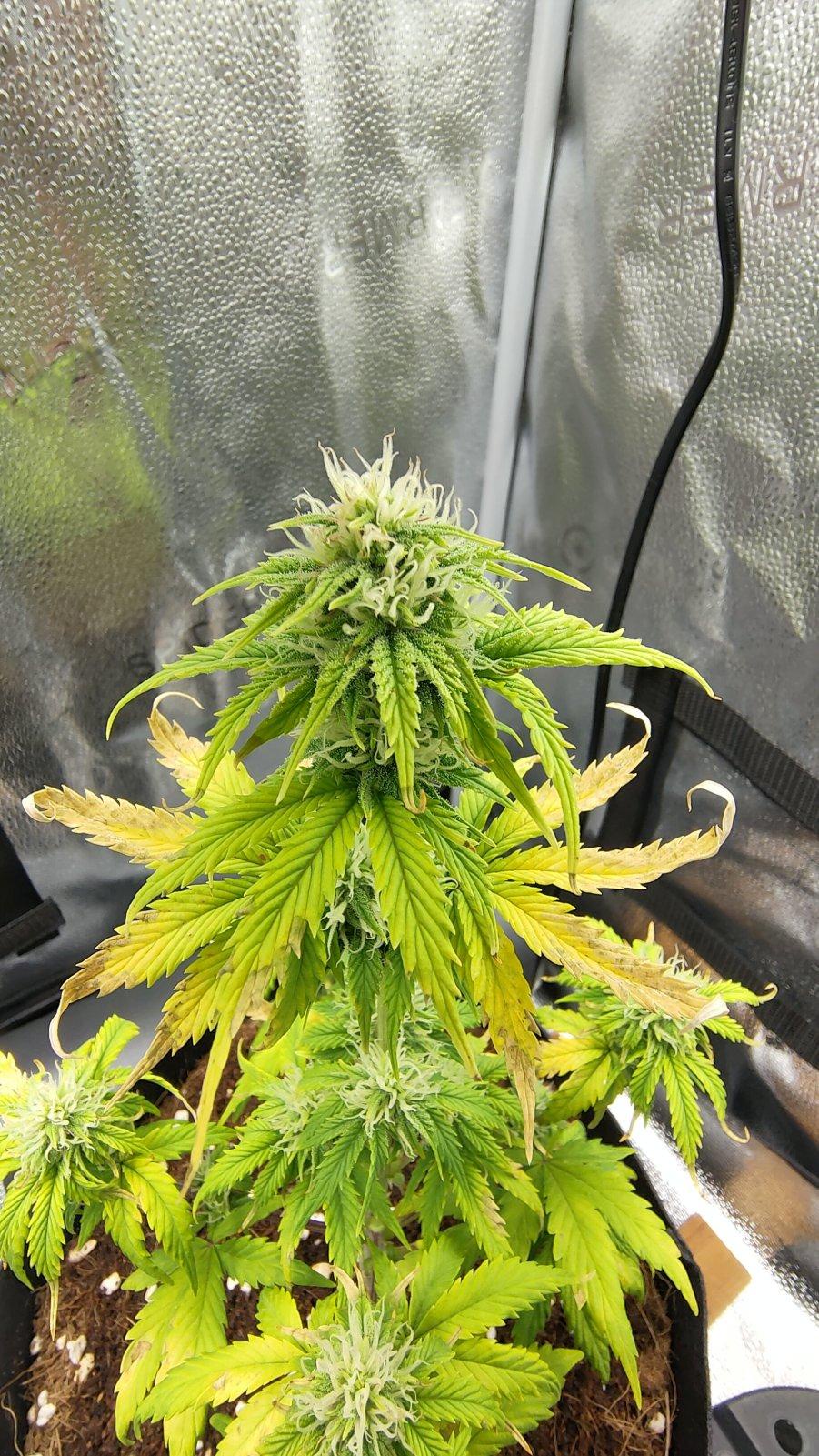
Nitrogen deficiency in cannabis appears as yellowing of lower, older leaves that progresses upward from the bottom of the plant. Because nitrogen is a mobile nutrient, the plant moves it from old growth to support new leaves. The key diagnostic marker is that yellowing includes the veins – unlike iron or magnesium deficiency where veins stay green.
Quick checklist:
- Yellowing starts on BOTTOM leaves
- Yellowing includes veins (not just between veins)
- New growth at top still green
- Leaves may cup upward before falling off
If yellowing appears on top/new growth first, it is NOT nitrogen deficiency.
Why Nitrogen Matters
Nitrogen is the most abundant mineral in cannabis and essential for chlorophyll production. Without adequate nitrogen, photosynthesis suffers and growth slows dramatically.
Demand by growth stage:
- Vegetative: High demand (NPK ratio around 3:1:1)
- Flowering: Lower demand (NPK ratio around 1:3:2)
Late flower yellowing of lower leaves is often normal senescence, not deficiency. The plant redirects energy to buds.
Visual Symptoms
Early Stage
- Pale or lime-colored lower leaves
- Subtle loss of deep green color
- Plant appears less vibrant overall
Moderate Stage
- Yellow spreads from lower to middle foliage
- Leaves may show brown spots at edges
- Leaves begin to cup upward
Severe Stage
- Entire leaves turn yellow including veins
- Leaves become brown and crispy
- Lower branches die back
- Severe growth stunting
The Key Pattern: Bottom-Up
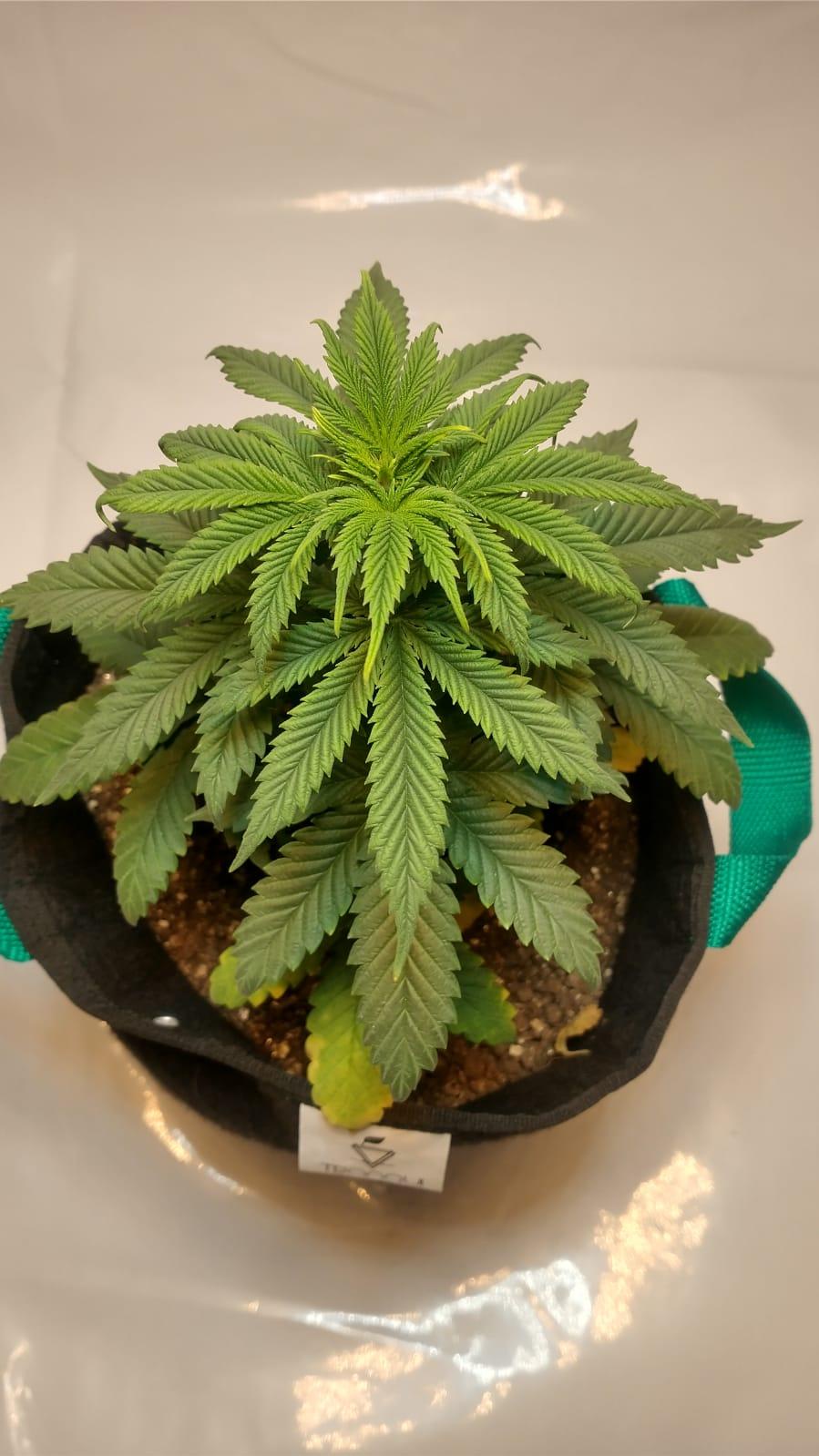
Mobile nutrients like nitrogen get pulled from old growth to support new growth. The plant sacrifices older leaves to keep young leaves alive.
Critical rule: If yellowing starts at the TOP, look for other causes:
- Iron deficiency (interveinal, new growth)
- Light burn (top canopy bleaching)
- Calcium or sulfur issues
How to Distinguish From Similar Issues
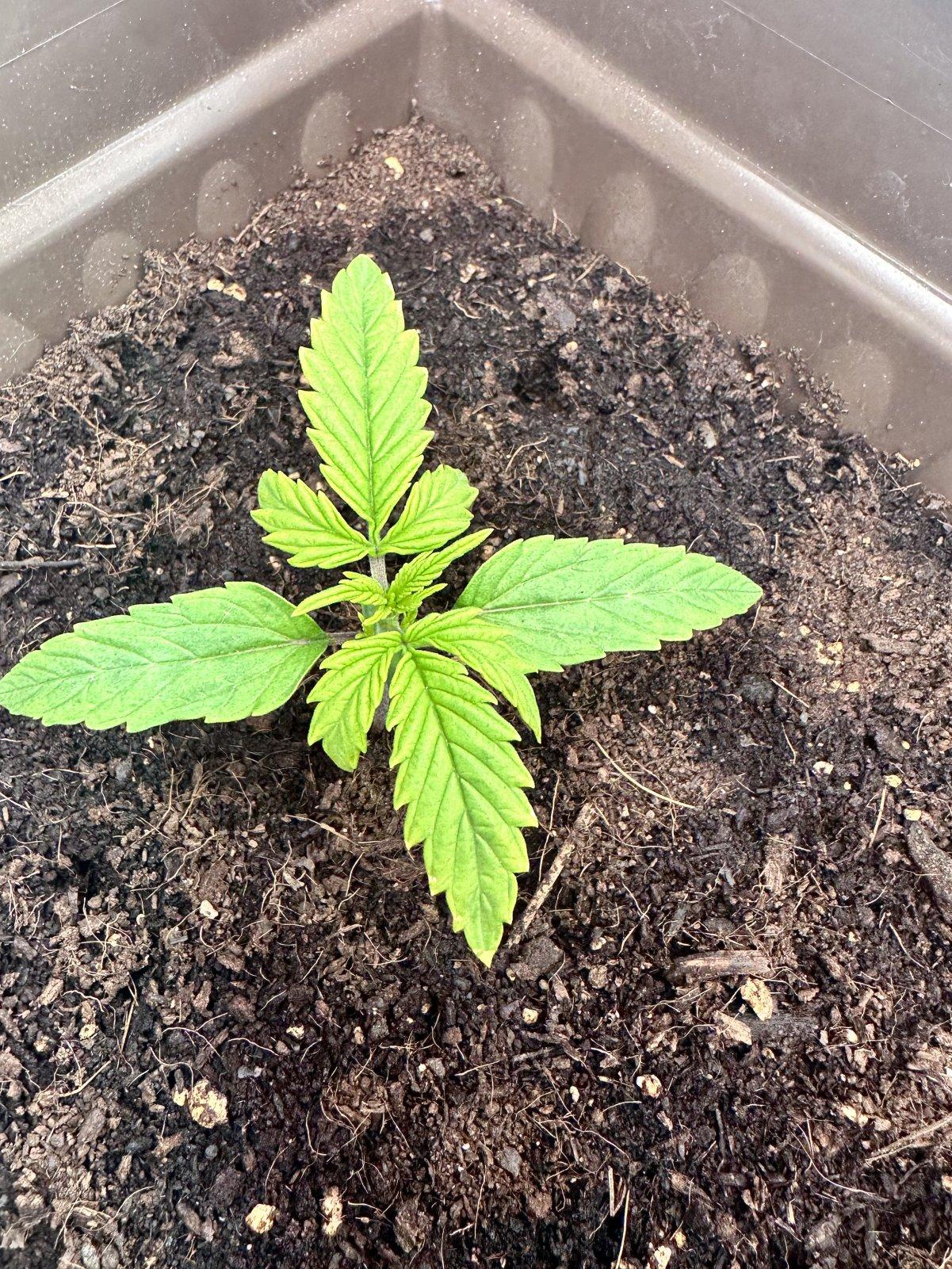
Nitrogen vs. Magnesium: Both affect older leaves, but magnesium shows yellow between green veins. Nitrogen yellows everything including veins.
Nitrogen vs. Iron: Location is opposite. Iron affects NEW growth at top. Both can show yellowing, but iron keeps veins green.
Nitrogen vs. pH lockout: High pH can cause nitrogen lockout. Check your pH first (6.0-7.0 soil, 5.5-6.5 hydro).
Nitrogen Toxicity: The Opposite Problem
Too much nitrogen causes “the claw” – leaves curve downward at tips with abnormally dark green, glossy appearance. Growth becomes stunted despite the dark color.
Fix by flushing with pH'd water and reducing feeding.
Treatment
For deficiency:
Check pH first – lockout causes false deficiency
Add nitrogen source (grow nutrients, fish emulsion)
Start at ¼ strength, increase gradually
Monitor new growth – old leaves won't recover
For toxicity:
Flush medium with pH'd water
Reduce nitrogen in feeding schedule
Wait for new healthy growth
How AI Detection Works
PlantLab's AI detects nitrogen issues by analyzing:
- Bottom-to-top color gradients
- Vein vs. interveinal coloration
- Leaf cupping direction
- Spatial distribution across canopy
Early detection catches issues when they're still fixable – within the first week of visible symptoms.
Try PlantLab free at plantlab.ai – 10 diagnoses per day.
FAQ
Can yellow leaves turn green again?
No. Once chlorophyll is gone, damaged leaves won't recover. But new growth will be healthy if you fix the issue.
How quickly does nitrogen deficiency spread?
Without correction, you'll see progression from lower to middle leaves within 1-2 weeks.
My plant is in late flower and yellowing – is this deficiency?
Probably not. Late flower yellowing of lower leaves is normal senescence. Only intervene if yellowing is rapid and reaches upper leaves.
What's the fastest fix?
Foliar feeding provides fastest uptake (24-48 hours). Root feeding takes 3-7 days to show improvement.
Does nitrogen deficiency affect yield?
Yes. Nitrogen-deficient plants produce smaller buds. Fix it early to minimize impact.