Designing Big System IT – Beyond the Bucket:
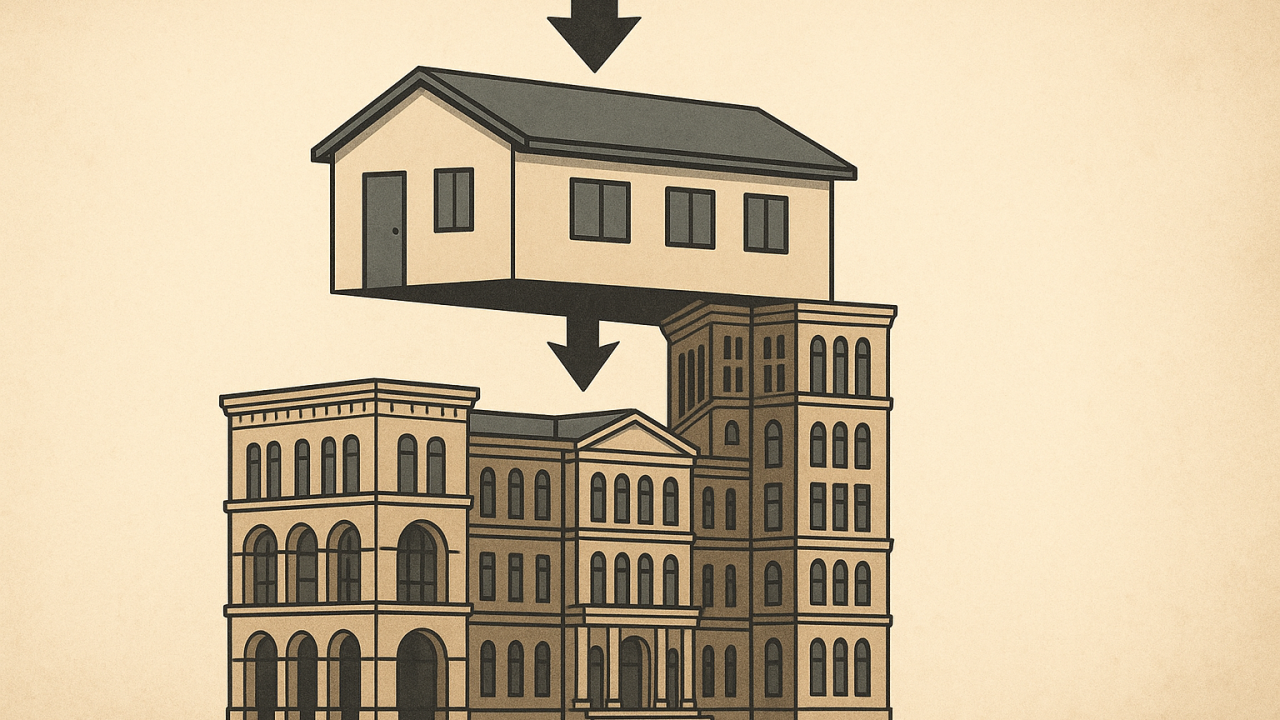
Why One-Size-Fits-All IT Planning Backfires in Complex Organizations
The drive to streamline IT systems and avoid redundant effort is both commendable and necessary. Every organization wants simplicity, efficiency, and control. Yet in the pursuit of efficiency, many enterprises make the mistake of treating IT planning as a single “big bucket” problem, selecting a single vendor platform and attempting to bend every department, workflow, and use case into its mold.
On paper, this approach promises uniformity and savings. In practice, it often leads to rigid systems that fail to meet real-world needs, introduce hidden costs, and ultimately compromise organizational resilience and triggering a ballooning costs trajectory.
The Allure of a Unified Solution
Consolidation makes sense at first glance. Centralized systems reduce vendor sprawl, appear to lower licensing costs, and present an attractive narrative of “one dashboard, one bill, one support line.” Particularly in SAAS ecosystems, bundled solutions are marketed as turn-key, comprehensive, and future-proof. In fact, this works well in a small to medium structure with clear coherent workflows, but breaks down significantly at scale.
Organizations are not uniform machines, they are living, evolving structures with departments and groups that have unique workflows, regulatory requirements, and cultural practices, particularly if they are servicing diverse groups of people with varied expectations of service that requiring complex concrete deliverables. Treating them as interchangeable units results in systems that are efficient only in theory.
The Hidden Costs of One-Size-Fits-All
Single Point of Failure
Concentrating everything in a single solution introduces fragility. Outages, licensing disputes, security vulnerabilities, or vendor policy shifts can suddenly halt critical operations across the organization. Instead of containing risk, consolidation amplifies it.
Escalating Complexity and Cost
When corporate systems don’t align with real workflows, IT staff on the ground are forced to “hack” workarounds; integrating competitor solutions, patching gaps with shadow IT, or supporting bespoke processes outside the official platform. This creates:
- Training overhead for staff learning both the official and unofficial tools
- Rising labor costs for IT teams who must maintain duct-taped integrations
- Greater security risk as unofficial tools bypass enterprise controls
Vendor Lock-In and Cost Creep
A unified SaaS solution can trap organizations in pricing models that evolve without warning. Vendor-driven price hikes, forced feature bundles, or the discontinuation of legacy functions can leave enterprises hostage to a platform that no longer fits but cannot be abandoned without massive disruption. Over time, initial “cost savings” erode, leaving organizations squeezed between budget constraints and essential services.
The Modular Alternative: Building IT Like Architecture
A healthier model is to approach IT planning like constructing a building. Architects don’t drop a prefab structure onto a historic city block and expect it to fit. They start with site-specific analysis, structural integration, and modular components that work together in harmony.
The same principle applies to IT. Rather than a monolith, organizations need a modular framework that:
- Begins with intense consultation: mapping actual workflows, regulatory obligations, and user needs
- Identifies areas of genuine commonality: shared functions like identity management, storage, or reporting that benefit from centralized solutions
- Allows flexible modules: department- or process-specific systems that integrate cleanly with the larger framework but are not forced into it
This approach respects the diversity within organizations while still reaping the efficiency gains of centralization where it truly applies.
The dream of a seamless, one-size-fits-all IT platform is seductive, but for complex organizations it is a trap. True efficiency and resilience come not from shoehorning unique workflows into rigid platforms but from modular planning that balances centralization with flexibility.
By designing IT as a layered structure, foundational systems supporting specialized modules, organizations can avoid single points of failure, control costs, and empower IT teams to support innovation rather than fight against the limitations of ill-fitted tools.
In IT planning, efficiency is not about shrinking everything into one bucket. It is about building a resilient structure, piece by piece, that can adapt, grow, and support the complexity of the organization it serves.