The Vanishing Chain of Accountability
Since the dawn of office management, a privileged set of people have always had access to sensitive information. This has never been a secret. Spy organizations, governments, and managers, whether corporate or political, have long understood that no organization can function without assistance. Success, and its greatest vulnerabilities, rest on loyalty and culture. From senior managers to secretaries, people in your circle inevitably hold some degree of privileged access.
Technology has transformed how this access works. What once lived in a filing cabinet behind a secretary’s desk now sits in vast digital systems. At first, this meant a known and vetted IT person managing local servers. Today, it often means a nameless, faceless cloud provider running black-box systems that promise efficiency but also turn data into a revenue source.
Access pathways shifted as well. Instead of calling someone to fetch a paper file, users now connect to devices that retrieve information from wherever it lives. No one carries the folder down the hallway anymore. Instead, software transports it across cables and airwaves to appear on a screen.
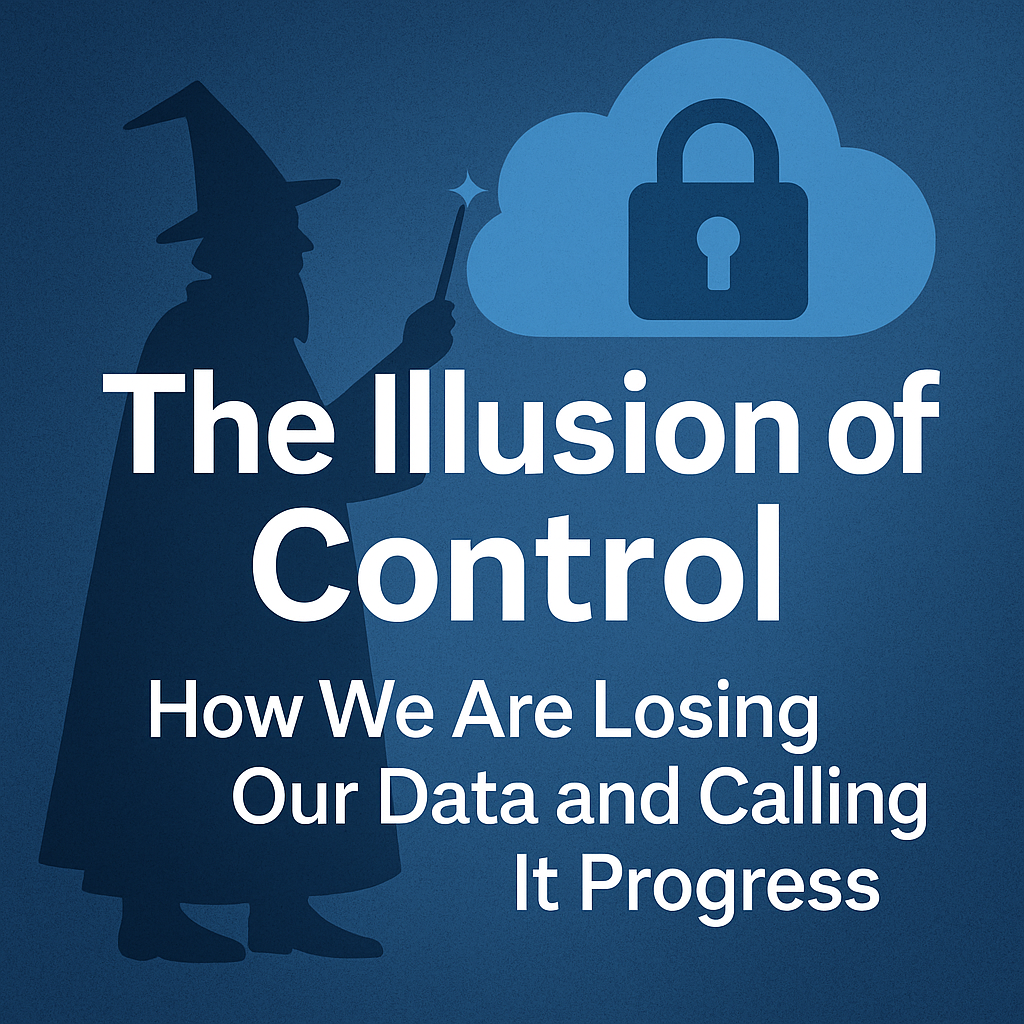
The IT team became responsible for securing this digital journey. They ensured only the right person gained access. They protected data from corruption or theft while it traveled. They kept devices functional and safe. In practice, IT absorbed every role in the old chain: the file cabinet, the secretary, the courier, the guard, the builder, the designer, and more. Over time, in many settings, this role has shifted to black-box megacompanies holding all the keys, while more and more local IT were left only to facilitate and manage access as well as serve as a powerless scapegoat when things went wrong, expected to repeat the mantra of faith that the distant unknown corporate wizards would eventually fix it.
From Tangible People to Invisible Systems
Here the character of trust changed. The secretary or IT manager was a visible person you could name, know, and vet. In contrast, IT as infrastructure quickly became invisible, noticed only when something broke. A network outage, a crashed server, or a breach made it suddenly visible. At all other times, IT blended into the background, as ordinary and unquestioned as electricity or plumbing. It became ubiquitous, part of the furniture, tended in many organizations by mostly powerless caretakers with little control or comfort to offer when things went wrong.
That invisibility was deceptive. People grew comfortable with the idea that information simply appeared when needed. And when it did not, faith shifted to the distant corporate wizards and mages who were said to control the unseen machinery. The physical act of a trusted person walking a file down the hallway was replaced by the silent efficiency of automation and an unquestioned belief in their higher powers of progress and technology. What had once been an accountable human process became a seemingly magical one, run by unseen systems guided by figures no one ever meets.
From Trusted IT to Apprentices of the Distant Wizards
At first, the invisible infrastructure was still anchored in trusted people. The local IT staff set up and ran the servers. They were known, named, and accountable. They could design or customize systems to match the specific needs of their organization. They were craftsmen who understood the work, the people, and the tools. While companies worked hard to provide them tools to do their job.
That role has now been hollowed out. Local IT no longer runs the systems directly. Instead, they spend their time bending massive off-the-shelf platforms to fit local needs. Tools are marketed with sweeping promises but often deliver limited or ill-fitting results. To fill the gaps, IT departments are forced to stitch multiple large systems together, creating awkward joins between tools never designed to work side by side.
Shadow IT often emerges as frustrated business units create their own unofficial applications and workflows. Custom processes multiply just to bridge incompatibilities. Instead of owning and shaping a handful of systems built for the job, IT is now consumed by the effort of holding together conflicting platforms that often work against each other.
Real control over change is rare. Most decisions are made by distant corporate wizards who tend to only alter their spells when enough customers demand it. Local IT, once the trusted builders and custodians, are reduced to apprentices trying to patch together fragments of the wizards’ magic. They must keep the illusion alive while knowing they control little of the machinery behind it, and they are still expected to accept the blame when that machinery fails.
The Disappearance of Trusted People
This brings the story back to where it began. Once, organizations could name the trusted people in their circle. You knew the secretary who held the keys to the cabinet. You knew the IT manager who controlled the server. Trust was visible and personal, grounded in relationships and accountability.
Today that circle has vanished. The visible people who once built and guarded the systems have been replaced by distant wizards who operate from within corporate black boxes. Local IT is often left as their powerless apprentices, managing access and patching gaps but unable to change the systems they are held responsible for.
Instead of real trust built on human connection, organizations now rely on contracts and liability clauses. Paper agreements stand in for personal loyalty, giving the appearance of control without any real influence over the machinery behind them. In practice, few organizations even know who actually holds the keys to their data or what interests those people serve.
What was once a personal bond of trust has dissolved into faith in unseen figures, and the people closest to the work are left as caretakers of systems they do not control.
A Path Forward: Refocusing the Role of the Technologist
The problem is not technology but the priorities that shape its use. To solve this, technologists must reclaim their role as stewards rather than sales channels. The focus must move away from serving corporate bottom lines and return to meeting the real needs of organizations and the customers they serve.
That starts with visibility, an honest look at who owns what and who controls the keys to the cabinet. Technologists must map the hidden infrastructure, name the unseen operators, and surface the dependencies that silently shape decisions.
Next comes choice. Instead of defaulting to a single all-in-one solution, technologists must guide organizations toward the right blend of local services, customer-controlled cloud platforms, and large shared cloud systems where they are truly justified. Not everything needs to be centralized. Not everything should be outsourced.
This demands rejecting the sales-cycle myth that one product can solve every problem. It means returning to the craft of providing IT as a real service, selecting, integrating, and adapting tools based on need, not vendor roadmap. It means real IT work done by real people delivering real value, with systems that fit the organization rather than the other way around.
Revealing the Wizard
Without this shift, the illusion will hold until we realize our control and privacy have slipped entirely into the hands of others. Technologists must reveal the wizard. We need honest conversations about how data is managed, what trade-offs are being made, and what risks we are accepting. If we continue to focus only on revenue and self-interest, the path forward leads to disaster. Honest discussion offers a chance. Hoping to navigate the quagmire of our data dilemma may be tilting at windmills, but avoiding the conversation will guarantee consequences far more severe.