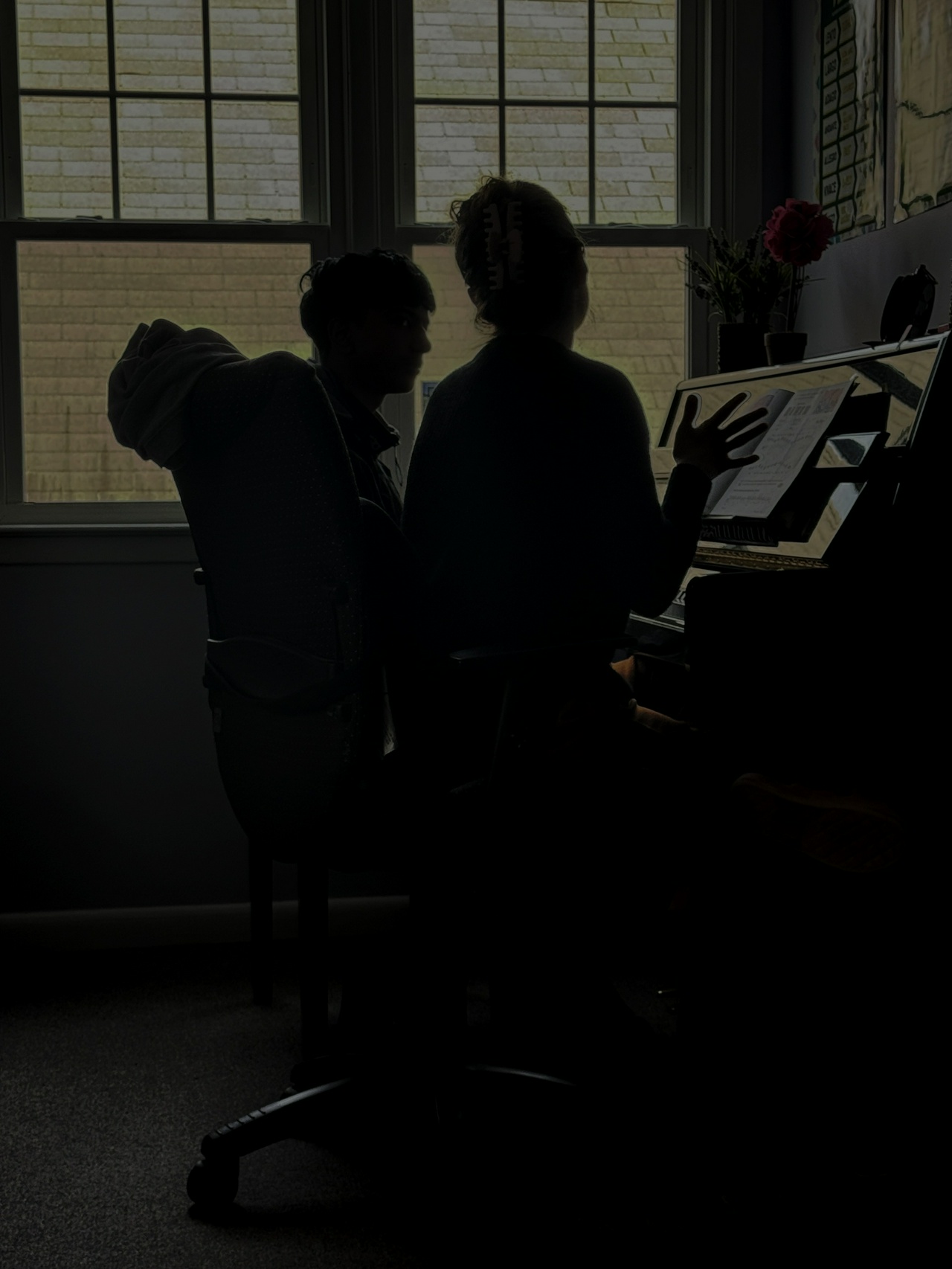
When Her Rhythm Showed
After nearly two years of back-and-forth, my son finally decided he wanted to play the piano. We searched for a tutor and eventually found one nearby—perfect for me, because I love my kids, but I don’t love being a full-time shuttle service.
(If you’re wondering why Mom isn’t in this story, that’s something I’ll explore another time.)
The tutor quoted a fair rate. “Considering the economy,” she said, “I’ll do $35 per half hour.” It felt considerate, almost unusually so.
But during our phone call, something in her voice caught me. She sounded distracted, distant. When I asked, she said she was caring for both her parents, who were sick. I didn’t think much of it at the time—other than noticing myself judging her tone more than I should have.
Then we met.
She was petite, attractive, and kind, but the moment she started speaking, I noticed things I hadn’t expected.
• Her mind clearly moved faster than her words; speech took effort, like each sentence had to fight its way out.
• She had small, involuntary facial and body tics.
I quietly wondered if she was dealing with early-onset Parkinson’s. And I regretted how quickly I had judged her over the phone—another reminder of where my mind still needs work.
But then something beautiful happened.
As soon as she began teaching—her hands on the keys, her voice guiding my son—the tics faded. Her speech smoothed. She was steady, focused, alive in a way she wasn’t a minute earlier.
In that moment, I saw her in her flow. And it gave me hope—about her, about my son, and about the way people transform when they’re doing what they were meant to do.