Keep Digging

“We didn’t know we were changing the world.
We just dug.” — The Gophers
This is a story I ran across yesterday. I usually don't post other people's writing, I mean, I'll post quotes—but... I REALLY really liked this. Enjoy.
Story by Margaret Harris
Illustrations by Greg Stump
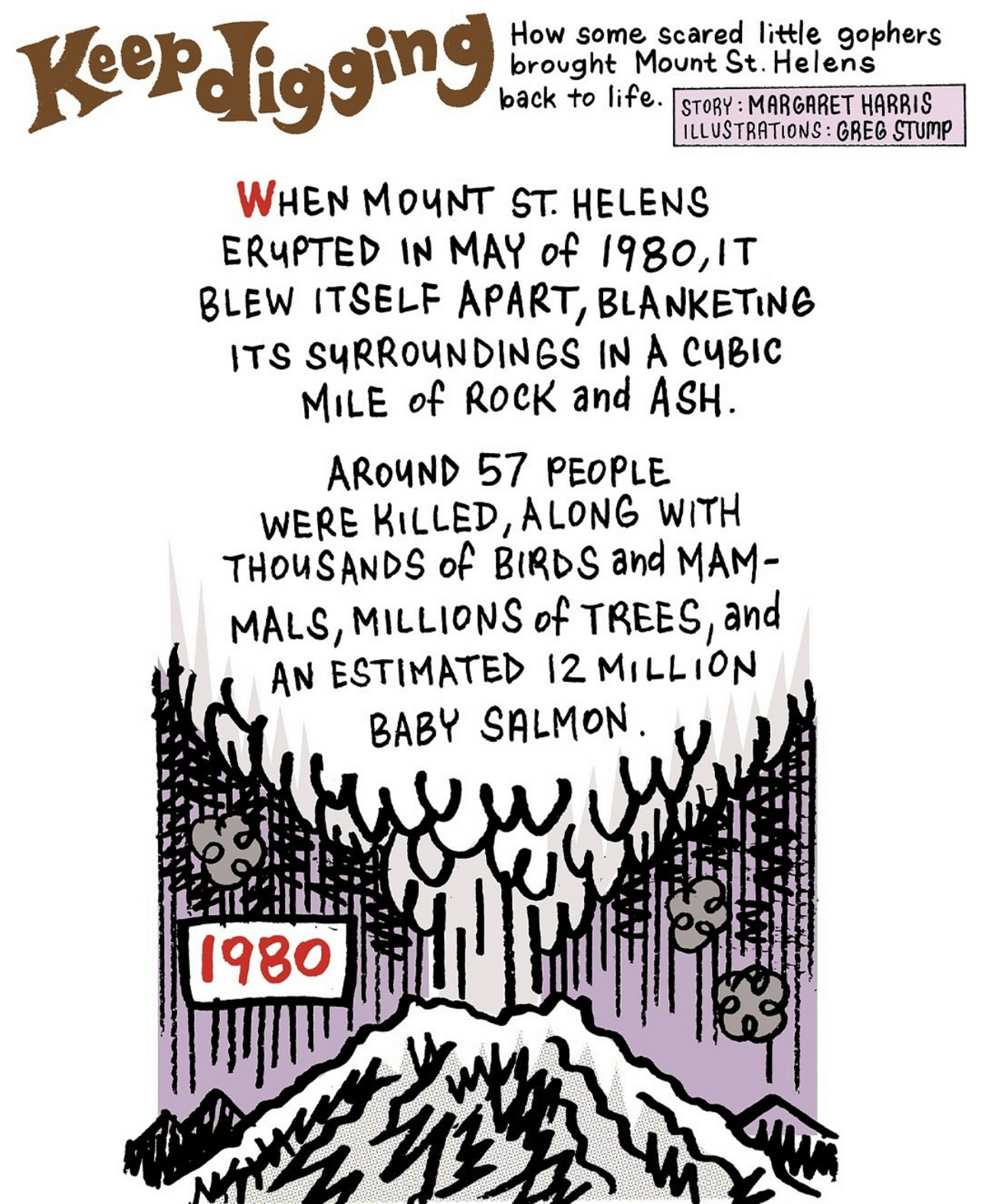
When Mount St Helens erupted in May of 1980, it blew itself apart, blanketing its surroundings in a cubic mile of rock and ash. Around 57 people were killed, along with thousands of birds and mammals, millions of trees, and an estimated 12 million baby salmon.
In the worst-affected areas, even the microbes in the soil perished, incinerated by the thermal energy of 1,600 Hiroshima bombs. An expedition to the area above Spirit Lake found no measurable carbon or nitrogen in the soil at all.
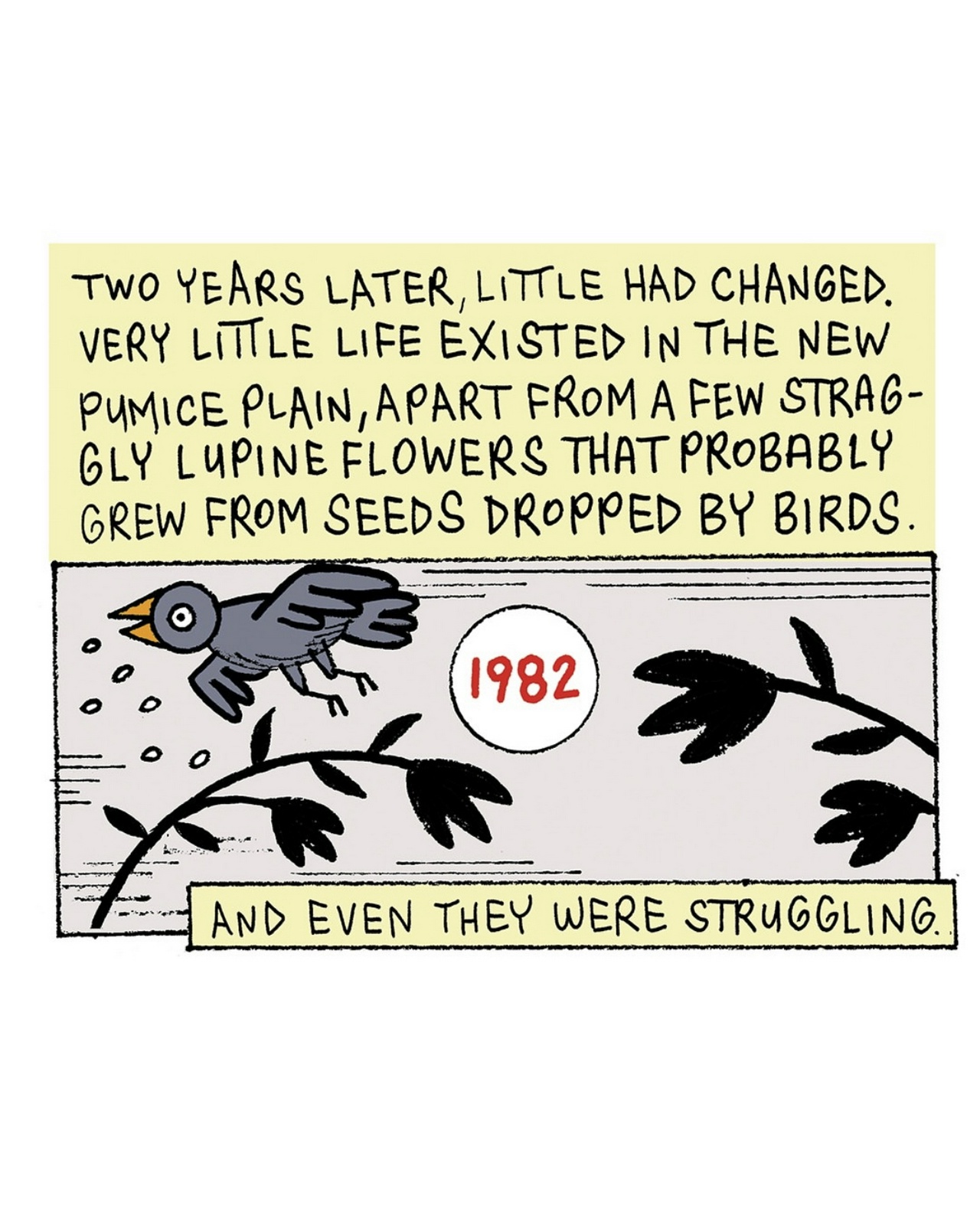
Two years later, little had changed. Very little life existed anywhere in the new Pumice Plain apart from a few straggly lupine flowers that probably grew from seeds dropped by birds. And even they were struggling.
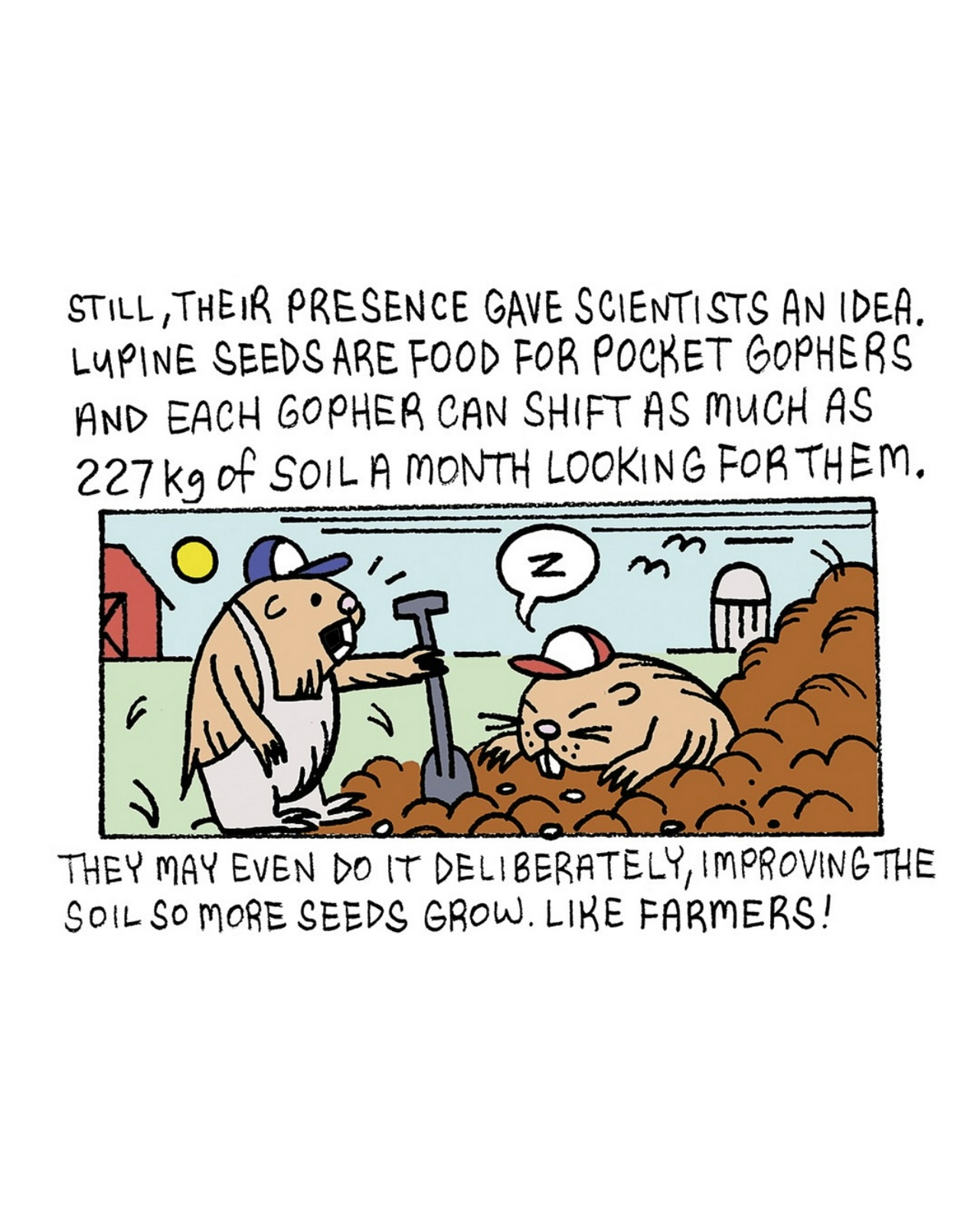
Still, their presence gave scientists an idea. Lupine seeds are food for pocket gophers, and each gopher can shift as much as 227 kg of soil a month digging for them. They may even do it deliberately, improving the soil so more seeds grow. Like farmers!
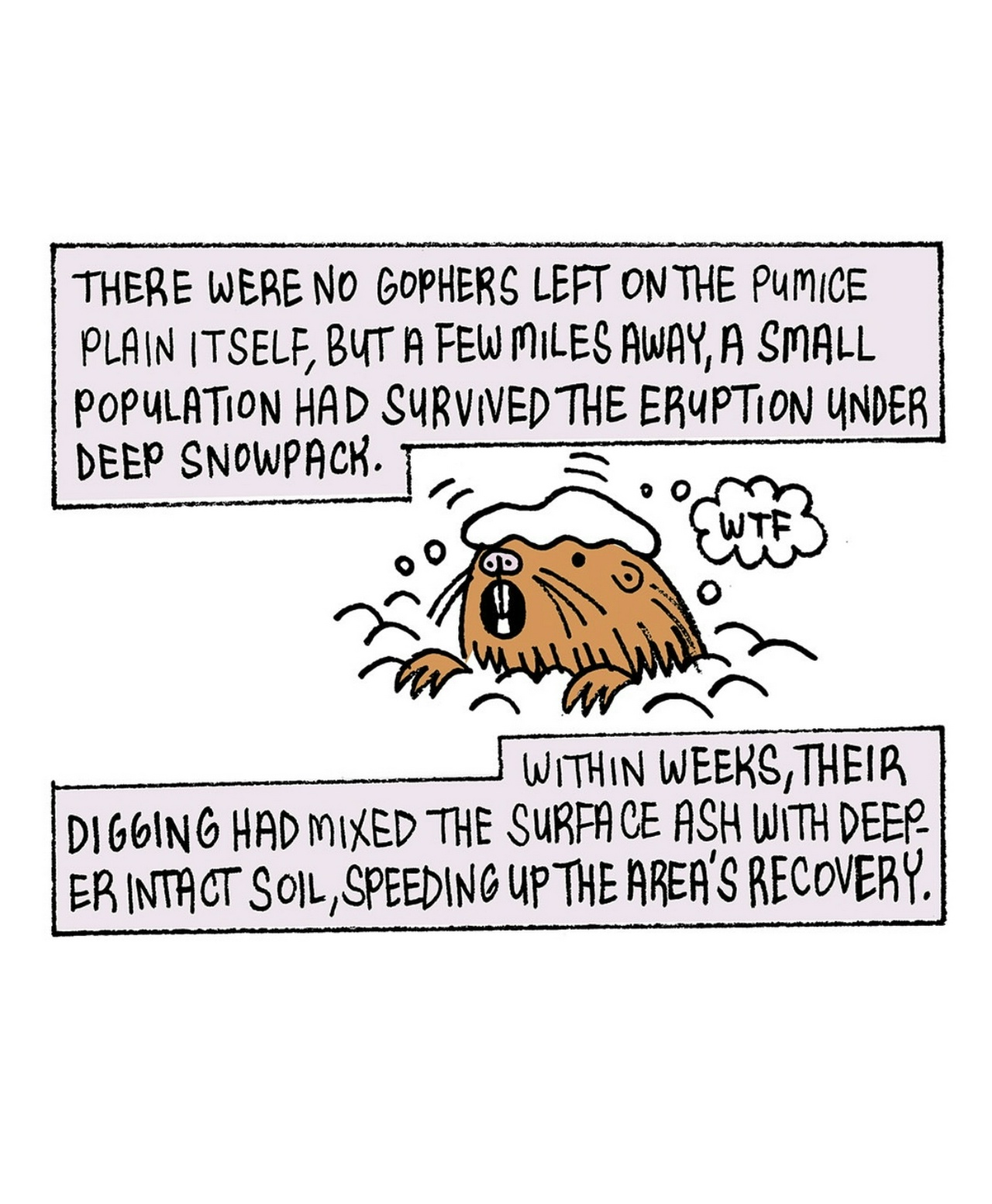
There were no gophers left on the Pumice Plain itself, but a few miles away, a small population had, amazingly, survived the eruption under deep snowpack. Within weeks, their digging had mixed the surface ash with deeper intact soil, speeding up the area’s recovery.
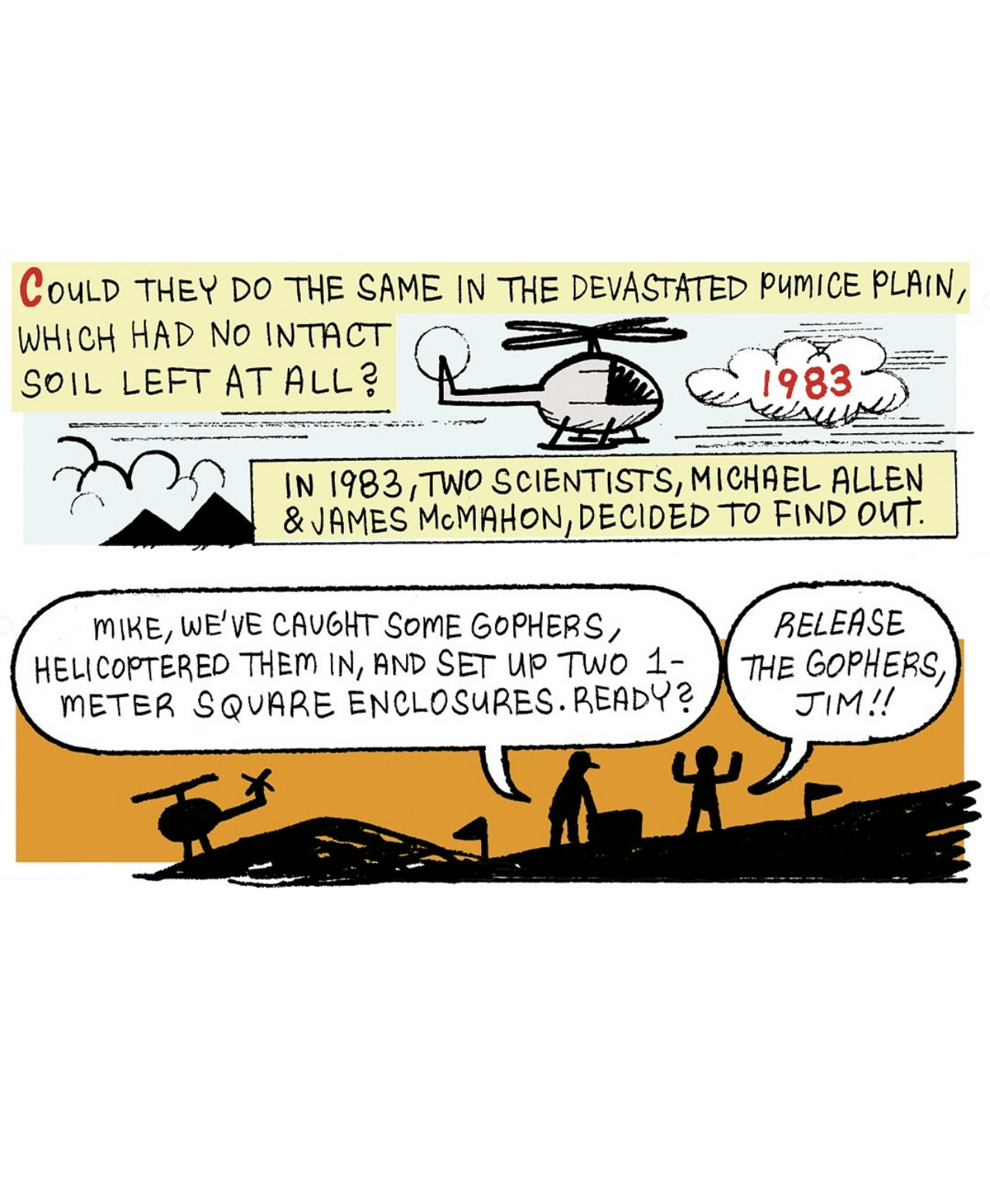
Could they do the same in the devastated Pumice Plain, which had no intact soil left at all? In 1983, two scientists, Michael Allen and James McMahon, decided to find out. They caught some gophers, helicoptered them in, set up two 1-meter square enclosures, and RELEASED THE GOPHERS.
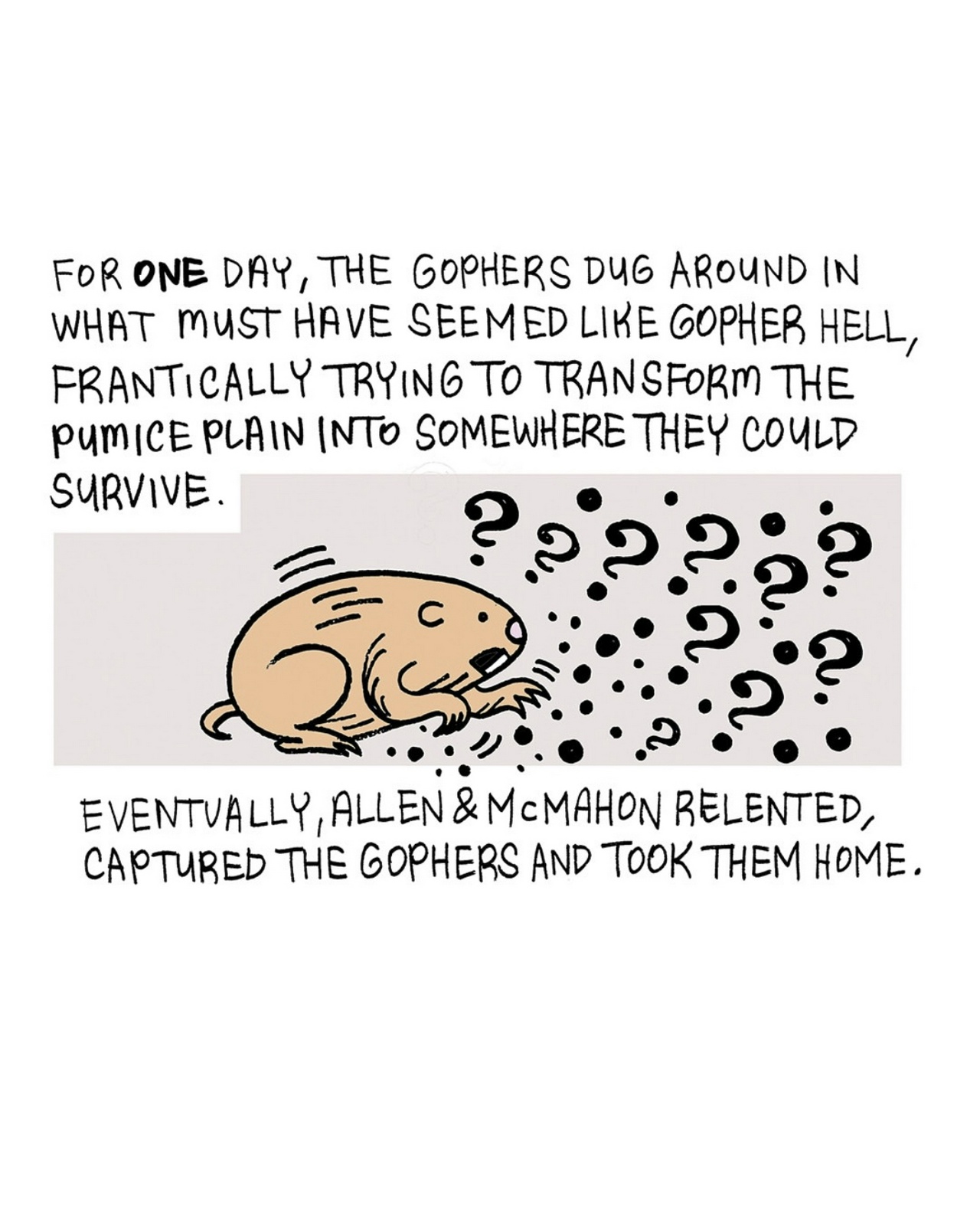
For ONE DAY, these confused gophers dug around in what must have seemed like gopher hell, frantically trying to transform the Pumice Plain into somewhere they could survive. Eventually, Allen and McMahon relented, captured the gophers, and took them home.
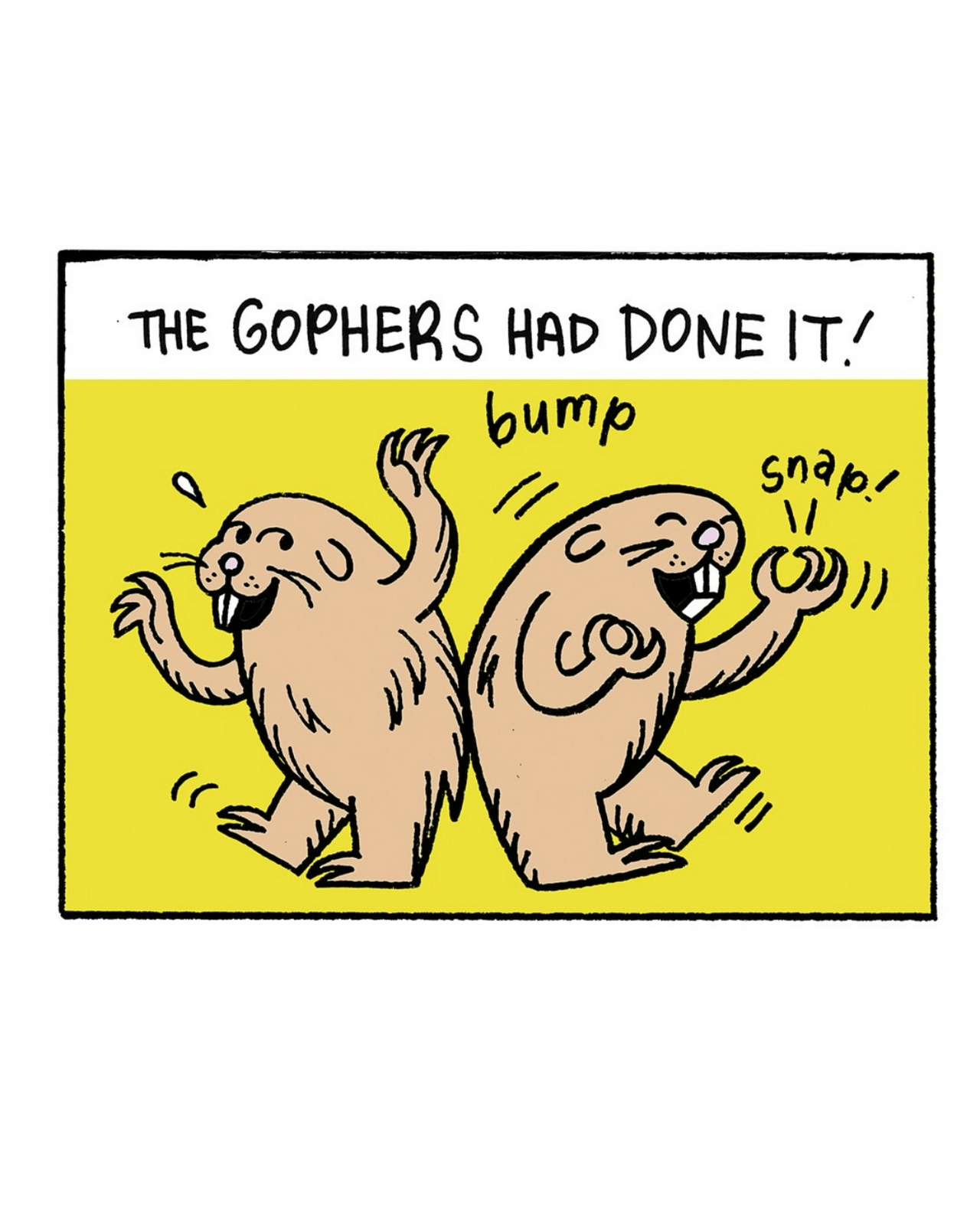
Six years later, Allen and McMahon returned. The Pumice Plain was still mostly barren. But this time, there were two 1-meter-square exceptions. Within these former gopher plots, FORTY THOUSAND different plant species were thriving. The gophers had done it!
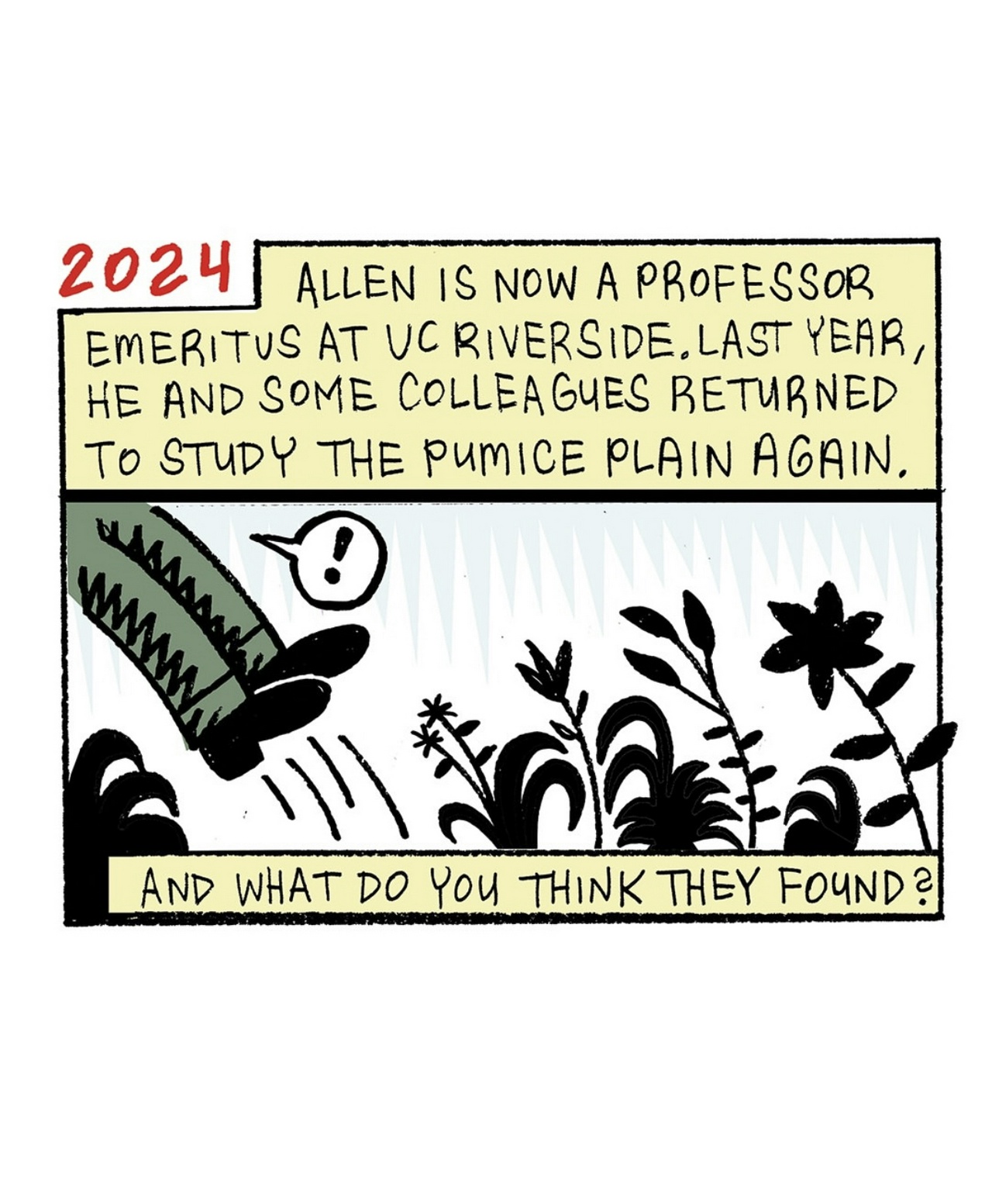
Fast forward another few decades. Allen is now a professor emeritus at UC Riverside. Last year, he and some colleagues returned to study the Pumice Plain again. And what do you think they found?
YEP. THEY COULD STILL TELL THE DIFFERENCE. “In the 1980s, we were just testing the short-term reaction,” Allen said. “Who would have predicted you could toss a gopher in for a day and see a residual effect 40 years later?”
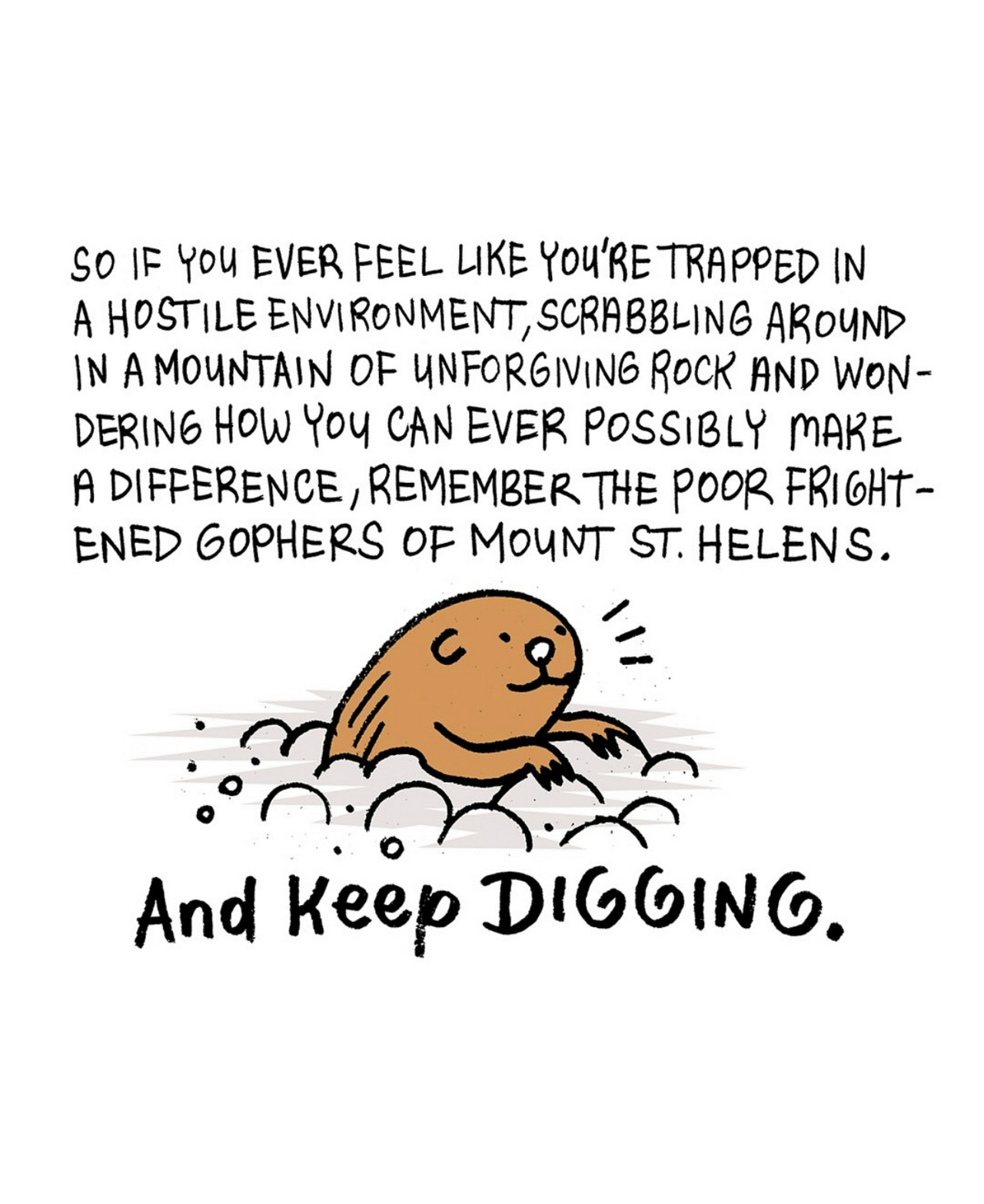
So if you ever feel like you’re trapped in a hostile environment, scrabbling around in a mountain of unforgiving rock and wondering how you can ever possibly make a difference, remember the poor, frightened gophers of Mount St. Helens.
And keep digging.
*Wolf's note: I realized a few days after reading this, that the idea to 'keep digging' isn't really the point of this story. The Gophers only worked for a day, after all. The benefits didn't manifest for decades. So, I suppose the moral of 'don't give up' is a valid one, but it's less to do with the industrious varmints and more to do with a little industry and a lot of patiences pays dividends.
So, maybe the moral is actually: work hard, then relax and wait. Let it happen.
Big ships turn slowly, after all.



WolfCast Home Page – Listen, follow, subscribe
Thank you for coming here and walking through the garden of my mind. No day is as brilliant in its moment as it is gilded in memory. Embrace your experience and relish gorgeous recollection.
Into every life a little light will shine. Thank you for being my luminance in whatever capacity you may. Shine on, you brilliant souls!
— Go back home and read MORE by Wolf Inwool
— Visit the archive
I welcome feedback at my inbox