Selecting Specific Natives for Your Garden
This time: Select your native plants ahead of the next planting season; Importance of rock walls [Dec 31, 2025]
Imagine how it will feel being surrounded by a variety of birds calling in the spring and butterflies fluttering around all summer. All you have to do is plant the right natives in enough numbers to support those populations.
After reading the last post, you know how to use the native plant list reference (below) to find potential plants that will work in your garden or yard. Your next step is to come up with a short list of plants that you will order over the winter so that you will have them ready in the spring. We'll focus on native perennials for now. This step for perennials takes some planning, especially if you are new to gardening and growing plants from seeds.
The planning builds excitement, though. Based on my experience, these steps will reduce disappointment.
🌱 Determine how many types of plants you will plant in significant numbers.
Remember, the native perennials you will plant will support dozens of species. Beneficial insects can't all feed on one plant. They need a group, a “mass planting.” Consider planting at least four or five, but hopefully many more plants.
I say this from experience. I have over-purchased and then not been able to have everything ready for spring planting leaving me with unopened packages of seeds that I'm not sure are going to be viable when I get to them. If you are new to this, and not sure about your time commitment, start slowly. Limit selections to two or three native perennials appropriate for your area and use those for the next steps. You will plant a bunch of whatever you choose, remember.
🌞 Characterize the area(s) where you will plant.
Use three criteria:
- Amount of sun
- Amount of rain/soil moisture
- Soil type
Make a note of the characteristics of each separate area where you will plant. For example, you might have one spot that is sunny (gets at least 8 hours of sun) and dry with average soil. Another spot may be in the shade mostly and be a low, wet area with clay soil.
🌺 Select plants from your ecoregion list.
Go back to your ecoregion list of native perennials and use your characteristics to select plants you will attempt to purchase to plant in the next planting season.
- You will generally want to select plants starting at the top of the perennials list. Start at the first one. Copy its Genus name (second column) or specific example (third column) from the page.
- Paste the name in your browser and search for its preferred characteristics. Does it match one of your target planting spots? Great! You have a winner! Does it prefer an amount of sun and a type of soil that you cannot provide? OK, then, pass it by and go to the next perennial in the list.
Ask the same questions about habitat characteristics for the next one and keep going until you have a candidate for each area where you will plant. Choose more if you have more capacity to plant and maintain during the growing season.
I had sunflowers that needed sun and also asters that I wanted for the Fall, but asters needed some shade. Knowing this helped me choose a couple of plants for sun and a couple options for shade which I did have under some trees in a section of my yard.

This section from the ecoregion list I used shows four groups of plants, names of examples, and the number of native butterflies and pollen specialist bees that they support. The top two support at least 100 butterflies and 33 or more bees. Now you can see that you need more than a couple of plants if you have room for them. I chose a short list of plants that I took to see if I could obtain them. The black-eyed susans were no problem because they are easily available in retailers near me. The others…well, that's a story for the next post.
Once you complete this selection process, congratulate yourself! You have a short list of the best native perennials to boost your garden habitat, an important step. Now you are ready to find outlets to purchase those seeds or plants. I'll cover that in the next post.
Seasonal Continuous Improvement: Winter/Offseason
Consider building a rock wall or feature in your garden to improve the habitat. Rock walls are foundational to the habitat that you are building in your garden. Rock walls provide vertical structures that birds, beneficial insects and small animals can use for shelter and nesting. In particular, they provide overwintering sites, known to be critical to building populations of beneficial insects.
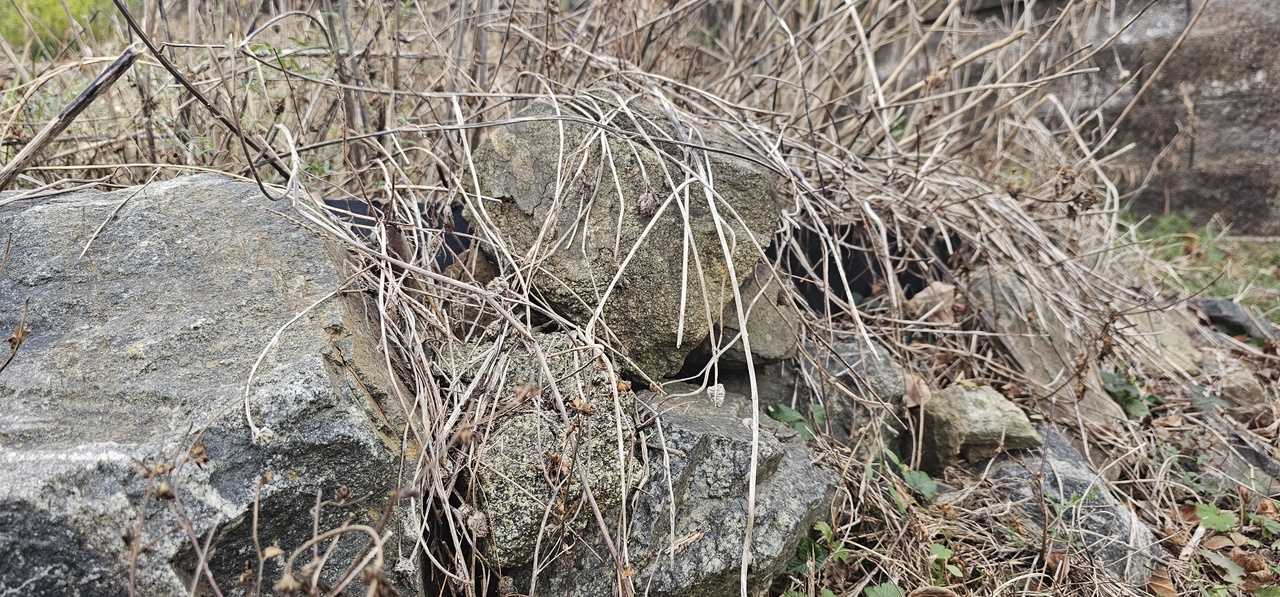
One of the rock walls in my garden taken December 31. It is made up of found rocks stacked vertically against a black barrier, visible in a couple of spots because rocks fell from the wall earlier during the active growing season. It defines a terrace on a sloped area of ground. Dead strands of annual vines can be seen over the rocks, after providing shade during the hot summer. Dead stems of native plants can be seen on the “high” side of the terrace.
This part of garden design can get your creative juices flowing! You can make a terrace, surround a pond, or just stack rocks to enhance an uninteresting area. The guide below, “Wildlife on the Rocks,” will help you with a habitat-centric design.
References
Keystone Plants by Ecoregion (National Wildlife Federation)
- Lists of “critical plant genera and example species that host significant numbers of butterflies, moths, and pollen specialist bees.”
- You simply select your U.S. and Canada ecoregion to display a list of the best trees, shrubs, and flowering perennials to use in your habitat garden. Easy!
- Covers North America only.
Wildlife on the Rocks: Providing the Rocky Habitats Bugs Need for Shelter | Xerces Society
- This guide has plenty of options and tips for adding or enhancing rock features in your garden to add additional critical support for populations of insects.
#HabitatGardening #BiodiversityGardening #Gardening #NativePlants #Nature #Environment #Conservation #Biodiversity
I’m Joe Wynne, a gardener since 1965 when I started as a helper for my grandmother. We maintained irises then and I still have those plants today. I’m a former Tennessee State Park Naturalist, who now focuses on making my garden a habitat for native plants and native bees, birds and butterflies. It's not always easy, but it's always fun. I share what I learn.
For more, follow me on Mastodon and check out my Flipboard magazine Habitat Gardening.
Copyright © 2025 Joe Wynne